🌊 A Short Reflection on Edges: Where Mountains Meet the Sea
How Nordic coastlines teach us about thresholds, movement, and the quiet courage of standing at the edge.
There is a particular stillness that lives along the Norwegian coast — not the soft, moss‑covered quiet of Finland’s forests, but a sharper, more elemental silence. Here, the world is shaped by cliffs that rise like ancient guardians, deep fjords carved by ice, and water that moves with a kind of slow, deliberate strength.
Standing at the edge of a fjord feels like standing inside a story.
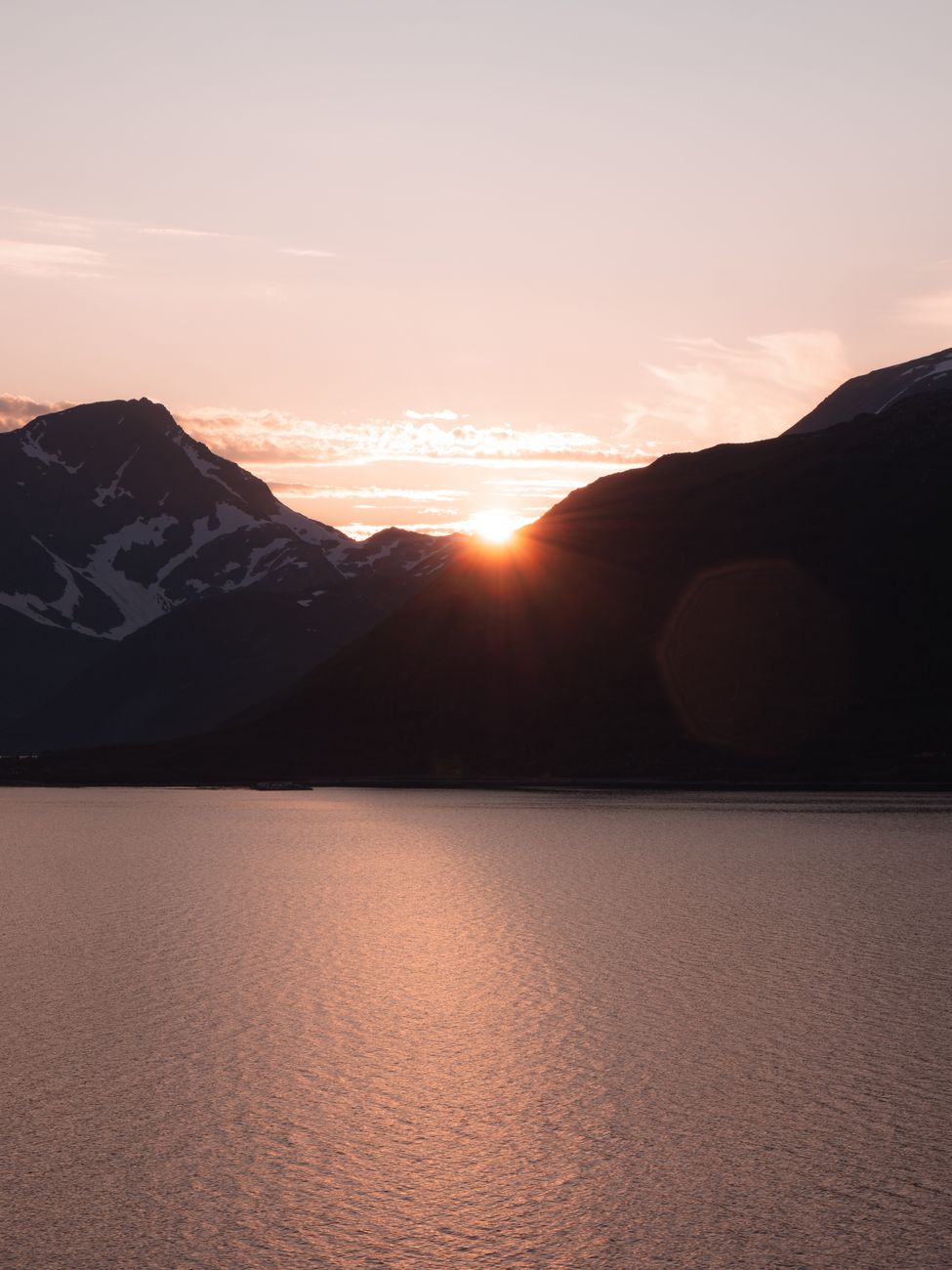
The mountains hold their ground. The sea keeps moving. And between them lies a thin, shimmering line — a meeting point, a threshold, a place where two forces coexist without competing.
It is this edge that Nordic literature returns to again and again.
🏔️ Edges as a Literary Metaphor
In Scandinavian writing, landscapes are never just backgrounds. They are emotional architectures — mirrors for the inner life.
Edges become symbols of:
- transition
- uncertainty
- quiet bravery
- the moment before change
- the tension between stillness and movement
Authors like Tove Jansson, Roy Jacobsen, and Knut Hamsun often place their characters near water, cliffs, or open horizons. These spaces are not dramatic in the loud sense — they are dramatic in the quiet sense. They ask the reader to pause, breathe, and consider what it means to stand between two worlds.
🌫️ The Coastal Mood: Light, Wind, and the Weight of Space
The Nordic coast carries a particular kind of light — pale, diffused, almost hesitant. It softens the edges of cliffs and makes the water look like brushed metal.
This light creates a reading mood that is:
- contemplative
- spacious
- slightly melancholic
- deeply grounding
It’s the kind of light that makes you want to sit by a window with a book, listening to the wind move across the water.
🌬️ Where Mountains Meet the Sea — A Lesson in Movement
Scandinavian Writing Shaped by Cliffs, Water and Movement
The meeting of mountain and sea is not a clash. It is a conversation.
The cliffs do not resist the water. The water does not try to erase the cliffs.
They simply coexist — one steady, one shifting.
This is the quiet lesson Nordic literature offers:
You can be both anchored and in motion. You can be both certain and uncertain. You can stand at the edge without falling.
Edges are not endings. They are beginnings with a different kind of light.
🌊 Reflection
When you stand at a fjord’s edge, you feel the weight of the world and the openness of possibility at the same time. Nordic literature captures this duality with tenderness — reminding us that life’s most meaningful moments often happen at the boundaries:
Between land and water. Between fear and courage. Between what has been and what might be.
The edge is not a place of danger. It is a place of clarity.
Explore more Nordic stories →
Earlier in September, we walked through Finland’s Lake District and its quiet forest paths.
Last week, we explored Finland’s forest flavors and autumn warmth.