Belize Antigua St Lucia Travel: Three Shades of Blue
There are seas that accompany a journey, and there are seas that become the journey. The Caribbean belongs to the latter. Before its islands reveal their histories, cuisines, or voices, they introduce themselves in color.
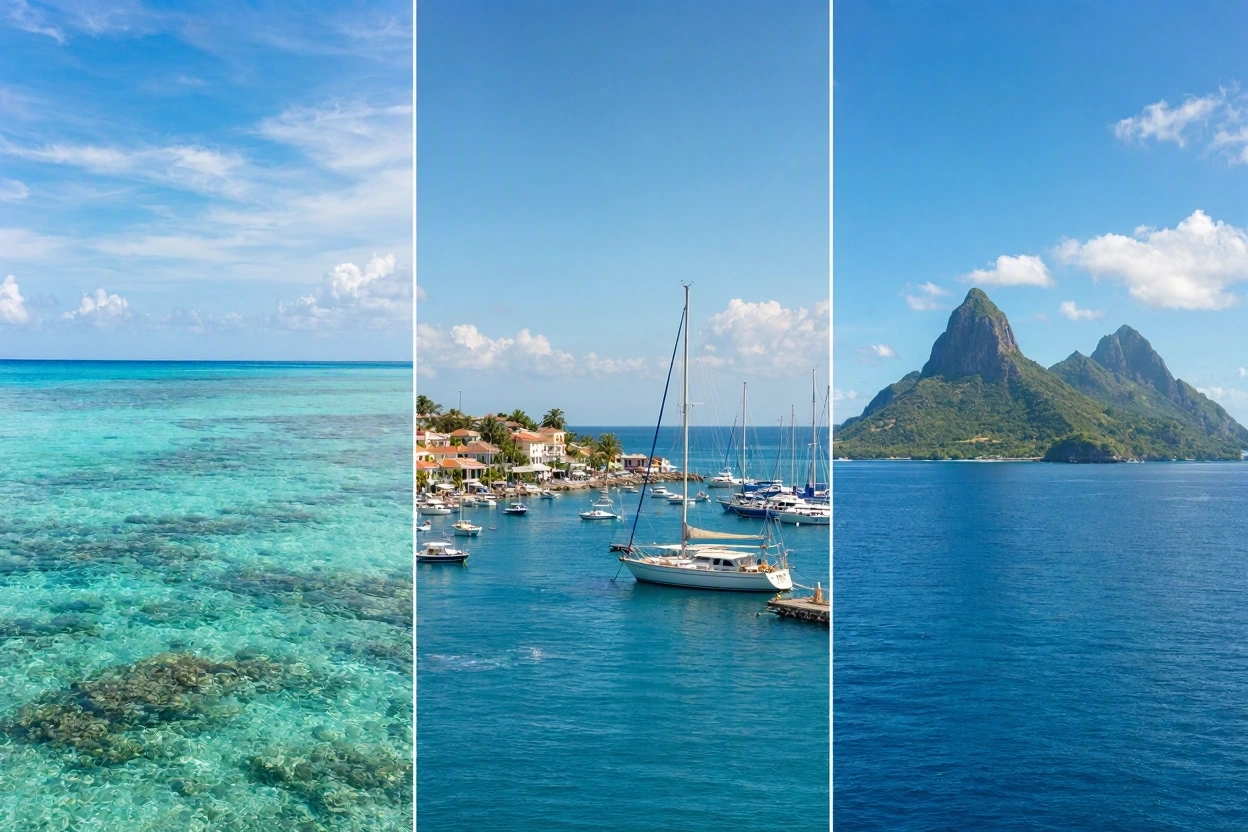
This month’s Caribbean Arc begins with three arrivals: Belize, Antigua, and St. Lucia. At first glance they share the same turquoise horizon and tropical sunlight. Yet each island-world reveals a different expression of the Caribbean, shaped by distinct histories and cultural inheritances. Like three shades of blue, they belong to the same spectrum while retaining their own character.
Belize Antigua St Lucia Travel and Antigua’s Maritime Heritage
Belize: The Blue of Reefs and Ancient Civilizations
Belize offers the lightest shade.
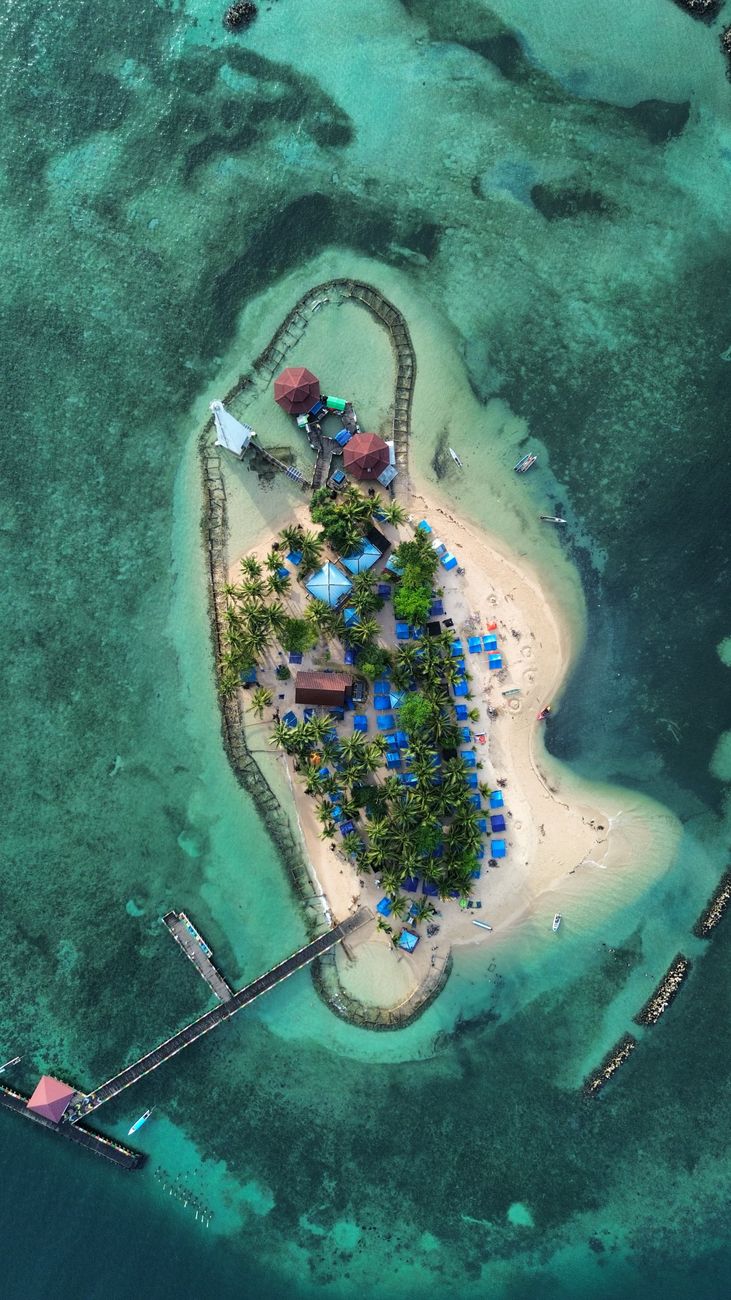
Approaching the coast, the sea appears almost transparent. Sandbars gleam beneath crystal waters, while coral gardens flourish along the Belize Barrier Reef. The landscape feels less constructed than discovered, an intricate meeting of sea, mangrove, and sky.
Yet beneath this tranquil surface lies one of the deepest historical layers in the Caribbean Basin.
Long before European ships entered these waters, Belize was home to thriving Maya civilizations whose cities connected the region to a vast network stretching across Mesoamerica. Sites such as Caracol, Xunantunich, and Lamanai stand as reminders that this coastline was already part of a sophisticated world of trade, astronomy, architecture, and governance.
Unlike many Caribbean destinations shaped primarily by plantation economies, Belize developed at the crossroads of indigenous, African, European, and Central American influences. English remains the official language, a legacy of British colonial rule, but visitors are equally likely to hear Belizean Creole, Spanish, Garifuna, or Maya languages.
The Garifuna people add another layer to Belize’s identity. Descended from Africans and Indigenous Caribbean peoples, they brought musical traditions, language, and cuisine that remain vibrant today. Drumming rhythms, communal celebrations, and cassava-based dishes continue to connect contemporary Belize with histories of resilience and migration.
Here, the Caribbean feels expansive, less defined by resorts than by cultural intersections. The sea may command attention first, but the deeper story is one of civilizations, encounters, and survival.
Belize Antigua St Lucia Travel Reaches St. Lucia
Antigua: The Blue of Harbors and Maritime Empires
Belize Antigua St Lucia Travel Through Antigua’s Historic Harbors
In Antigua, blue gathers itself into bays and harbors.
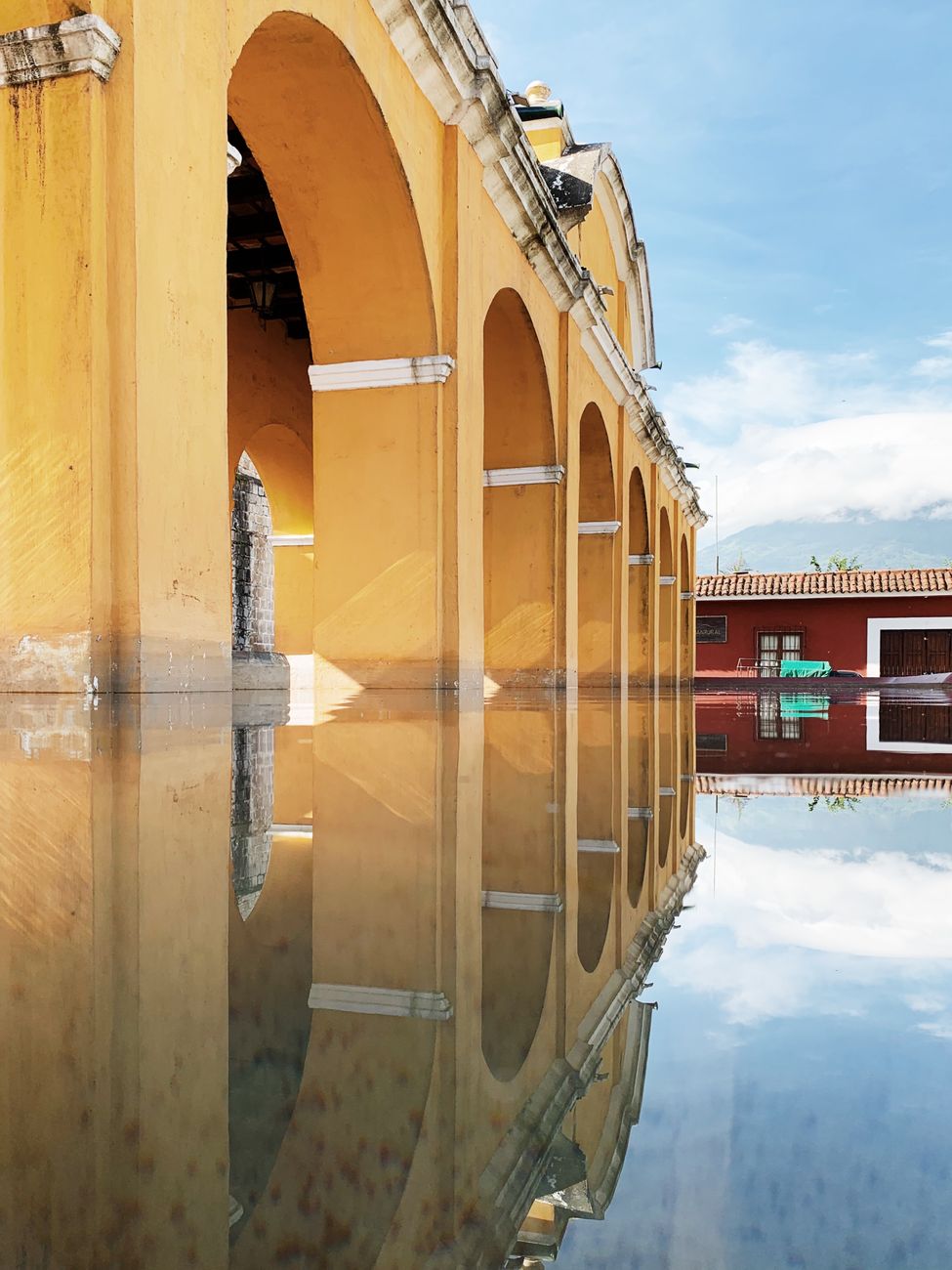
The island’s celebrated coastline unfolds in countless coves where sailing boats now rest in waters once crowded with warships and merchant vessels. The sea here is beautiful, but it is also historical.
Few places reveal the Caribbean’s colonial past as clearly as Antigua. During the eighteenth century, the island became one of Britain’s most important naval strongholds in the region. Its naturally protected harbors made it a strategic center for protecting trade routes and projecting imperial power throughout the Caribbean.
The restored dockyards of Nelson’s Dockyard remain among the most impressive reminders of that era. Stone warehouses, workshops, and dock facilities speak of a time when empires depended on Caribbean waters for wealth and influence.
Yet Antigua’s history cannot be understood through naval glory alone.
Behind the prosperity of the colonial period stood plantation agriculture and the labor of enslaved Africans whose descendants today form the core of Antiguan society. The island’s cultural identity emerged from that painful history, transforming inherited traditions into something uniquely Caribbean.
Contemporary Antigua expresses itself through music, cricket, storytelling, carnival, and a strong sense of community. The annual Carnival, originally associated with the celebration of emancipation, remains one of the island’s most significant cultural events. Steel-pan rhythms, vibrant costumes, and street performances transform historical memory into collective celebration.
Where Belize tells stories of cultural convergence, Antigua speaks of the sea as a force of commerce, empire, and ultimately cultural reinvention.
Belize Antigua St Lucia Travel Through Culture and History
St. Lucia: The Blue Beneath Volcanic Peaks
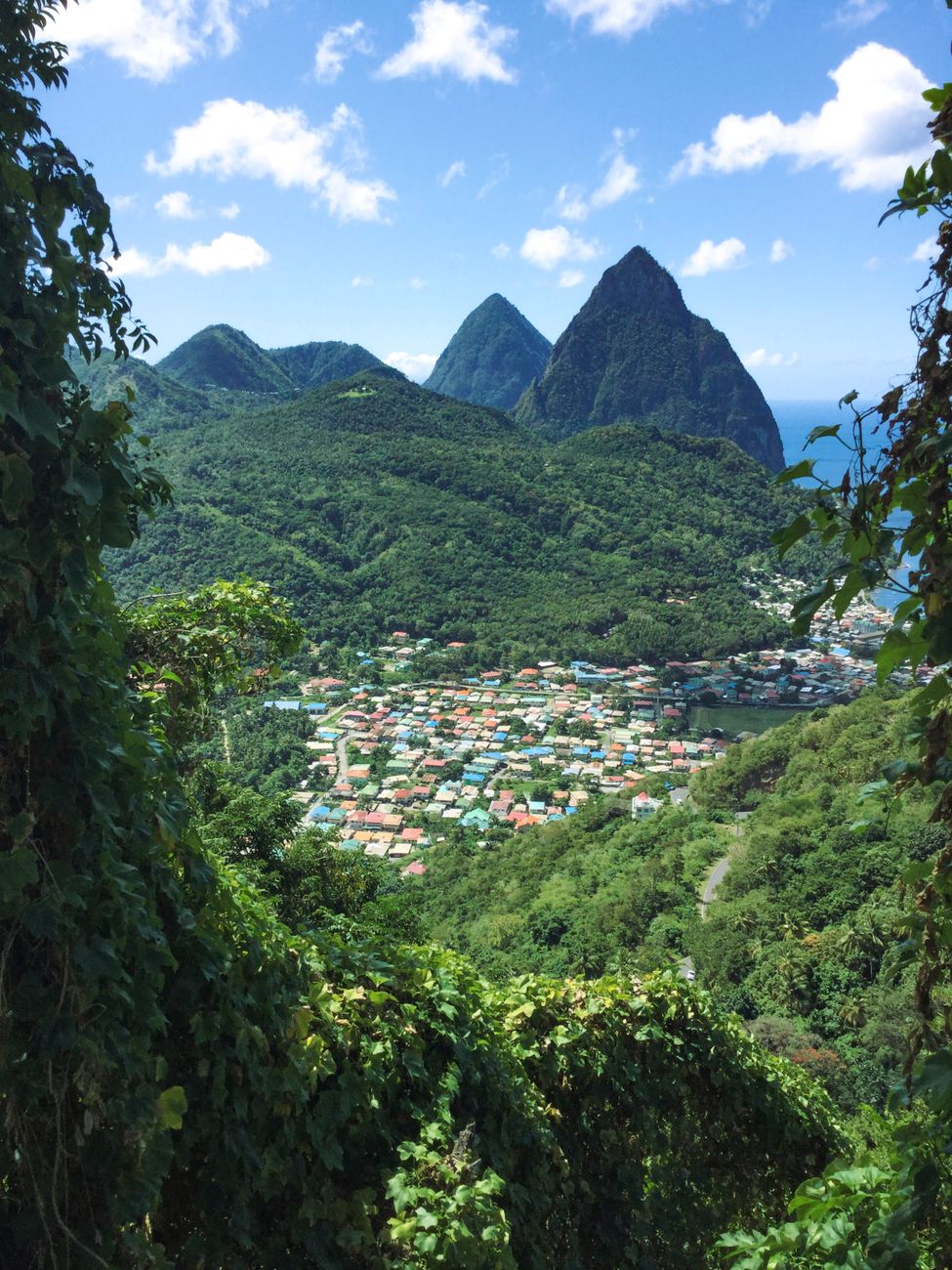
Photo by Eric Seddon on Pexels.com
Belize Antigua St Lucia Travel: The Volcanic Landscapes of St. Lucia
If Belize belongs to the reef and Antigua to the harbor, St. Lucia belongs to the mountain.
The twin Pitons rise dramatically from the sea, creating one of the Caribbean’s most recognizable landscapes. Clouds gather around their slopes as fishing villages and hidden bays nestle below. Here, volcanic geology gives the island a sense of scale and drama rarely found elsewhere in the region.
That dramatic landscape mirrors an equally dynamic history.
St. Lucia occupied a strategic position between competing European powers and changed hands repeatedly between Britain and France during the colonial era. So frequent were these transfers that the island became known as the “Helen of the West Indies,” a reference to Helen of Troy and the struggles fought over her.
The result is a culture where French and British influences coexist, often in unexpected ways. English serves as the official language, yet Saint Lucian Creole French remains widely spoken, preserving linguistic traditions that have endured for centuries.
African heritage remains equally central to the island’s identity. Music, folklore, religious practices, and culinary traditions all reflect the creativity of communities that maintained cultural continuity despite the disruptions of colonial rule.
St. Lucia has also produced an extraordinary literary legacy. The Nobel Prize-winning poet Derek Walcott drew inspiration from the island’s landscapes, histories, and voices, transforming local experience into works of global significance. Through his writing, St. Lucia became not merely a destination but a metaphor for memory, history, and belonging.
Standing beneath the Pitons, one quickly understands why artists continue to find inspiration here. The island possesses a rare combination of natural grandeur and cultural depth.
Why Belize, Antigua and St. Lucia Define the Caribbean Arc
One Sea, Many Histories
Together, Belize, Antigua, and St. Lucia reveal that the Caribbean is not a singular destination but a constellation of worlds connected by water.
Belize offers the legacy of Maya civilizations and multicultural crossroads.
Antigua reveals the maritime networks, plantation histories, and emancipatory traditions that shaped the British Caribbean.
St. Lucia embodies the creative fusion of French, British, African, and indigenous influences beneath volcanic peaks rising from the sea.
The sea is their common language, but each island speaks it differently.
Belize speaks through reefs and ancestral memory.
Antigua through harbors and history.
St. Lucia through mountains and poetry.
And so the Caribbean Arc begins not merely with beautiful waters, but with the cultures and histories reflected within them. The shades of blue may draw us in, but it is the human story behind each horizon that invites us to stay.
Recommended External Sources
Belize
- Useful for reef, cayes, marine reserves, and destination data.
UNESCO World Heritage Centre
- Belize Barrier Reef Reserve System
- Authoritative reference for the reef ecosystem.
Caracol Archaeological Project
- Scholarly resource for Maya history and archaeology.
Antigua & Barbuda
UNESCO World Heritage Centre
Antigua & Barbuda Tourism Authority
St. Lucia
- Pitons Management Area
The Nobel Prize
Suggested Source
Further Reading
- UNESCO World Heritage Centre: Belize Barrier Reef Reserve System
- UNESCO World Heritage Centre: Antigua Naval Dockyard and Related Archaeological Sites
- UNESCO World Heritage Centre: Pitons Management Area
- Belize Tourism Board
- Antigua & Barbuda Tourism Authority
- Saint Lucia Tourism Authority
- The Nobel Prize: Derek Walcott Biography