
Desert Silence Morocco: Space, Heat & Stillness
Desert Silence Morocco is not simply about dunes or distance. It is about the stillness of the Sahara, where space, light, and silence become part of the travel experience.
The first thing you notice in the Moroccan desert is not the sand.
It is the silence.
Desert Silence Morocco and the Vastness of the Sahara
Desert Silence Morocco and Endless Horizons
Not the silence of an empty room or a quiet street, but a deeper stillness that seems to stretch beyond the horizon. Standing at the edge of the Sahara near Morocco’s vast dune landscapes, the world suddenly feels larger and slower. The noise of schedules, notifications, and obligations recedes. In its place comes an awareness of space itself. The October North Africa arc places this reflection alongside Morocco’s Sahara landscapes and oasis culture, where dunes, palm groves, desert hospitality, and stillness form a shared narrative.
Desert Silence Morocco in Literature and Memory
Desert Silence Morocco as a Literary Landscape
Moroccan literature often returns to questions of place, memory, and belonging. Landscapes are rarely passive backdrops; they become participants in the story. Cities carry memories. Mountains guard histories. Deserts hold silences that seem older than language itself. Standing at the edge of the Sahara, it becomes easier to understand why. The horizon appears empty, yet it feels inhabited by generations of journeys, departures, reunions, and stories carried across caravan routes. The silence of the desert is not the absence of life. It is the presence of time.
For many travelers, deserts are imagined as empty places. Yet the Sahara reveals the opposite. It is not emptiness but presence. Every ridge of sand, every shifting shadow, every breath of wind feels amplified because there is so little competing for attention.
In cities, our eyes move constantly from one object to another. Buildings crowd the skyline. Traffic fills the streets. Advertisements demand attention. The desert removes those layers. It offers distance instead of density.
And in that distance, something unexpected happens.
You begin to notice.
How Heat Changes Time
How Heat Changes the Way We Travel
The line where earth meets sky becomes a subject worth studying. A lone track across a dune becomes a story. The movement of light across sand becomes an event. The desert does not overwhelm the senses. It sharpens them.
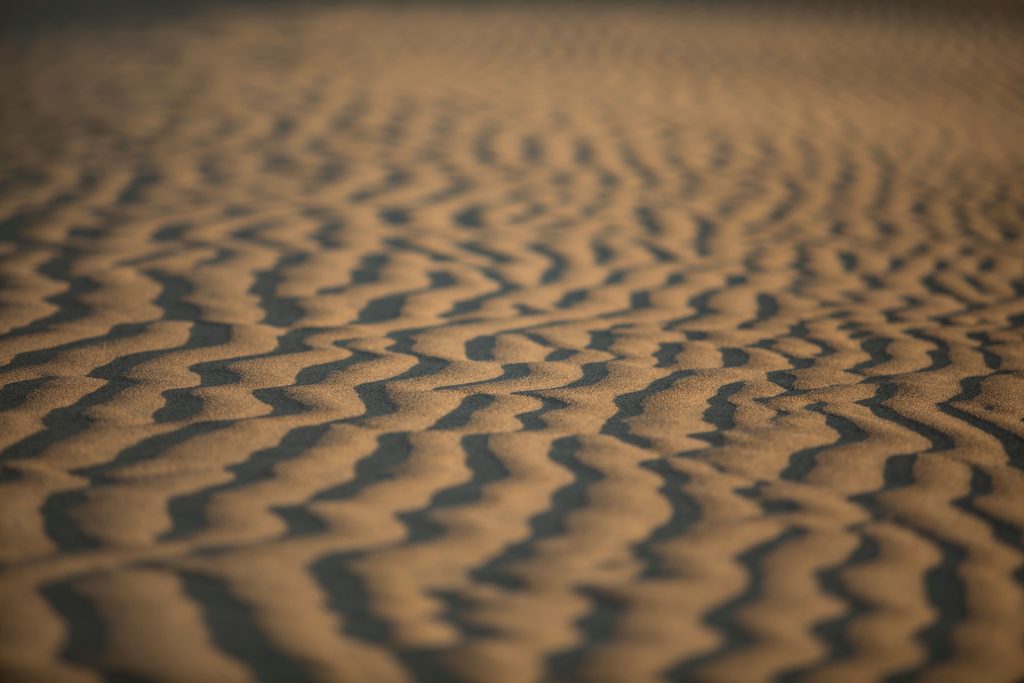
Across Morocco’s southern landscapes, dunes rise and fall like waves frozen in time. During the day, their color shifts with the movement of the sun. Soft gold becomes amber. Amber deepens into copper. Long shadows stretch across ridges and reveal patterns invisible only moments earlier. The landscape appears unchanged, yet it is constantly transforming.
Heat plays its own role in this transformation.

In many parts of life, speed is celebrated. Productivity is measured in movement. Progress is associated with acceleration. The desert offers a different rhythm. Under the midday sun, haste feels unnecessary and often impossible.
Movement slows.
Conversations become quieter.
Pauses become longer.
The heat encourages patience rather than urgency.
This slower tempo is reflected in many traditions associated with Morocco’s desert regions. Hospitality unfolds gradually. Mint tea is poured without hurry. Meals are shared over extended conversations. Time seems less fragmented than it often feels elsewhere. The warmth of oasis foodways mirrors the slower rhythm of the surrounding landscape.
Perhaps that is why deserts have long attracted travelers, writers, and seekers. The environment itself encourages reflection.
Without constant distraction, thoughts that normally remain buried have room to surface.
Questions linger longer.
Memories return unexpectedly.
Ideas become clearer.
Desert Silence Morocco After Sunset
Desert Silence Morocco Beneath the Night Sky
The silence does not provide answers. Instead, it creates space for listening.
There is a common misconception that silence means absence. Yet desert silence feels remarkably alive. Wind glides across dunes. Sand shifts almost imperceptibly. A bird appears briefly against an immense sky. Somewhere in the distance, a camel bell may break the stillness before fading again.
Each sound gains significance because there are so few of them.
In this way, the Sahara teaches attention. It reminds us that value often comes not from abundance but from scarcity. A single tree in a desert can hold more visual power than an entire forest. A single note can feel more memorable than a crowded chorus.
The same lesson appears in Morocco’s cultural landscapes.
The spice markets of Moroccan cities are known for their sensory richness, yet even there, moments of stillness exist between the movement and color. Beyond the souks and medinas lies a wider geography where silence becomes part of the experience. The vibrant spice culture that fills market stalls eventually gives way to open horizons and wind-shaped dunes.
As afternoon fades, the desert undergoes another transformation.
This may be its most beautiful hour.
The intensity of the heat softens. Shadows lengthen dramatically. Sand ridges glow with warm light before slipping gradually into muted tones. The horizon expands as colors become gentler. There is no abrupt transition, only a slow unfolding from day into evening.
Watching sunset in the desert feels less like witnessing an event and more like observing a process.
Nothing rushes.
Nothing competes.
Everything seems to happen at precisely the pace it should.
Then comes night.
The sky, unobstructed by tall buildings or urban glow, reclaims its presence. Stars appear gradually and then suddenly seem endless. The darkness is not threatening. It is expansive.
During these moments, scale becomes impossible to ignore.
Human concerns shrink.
The landscape remains.
The sky remains.
The silence remains.
And perhaps that is the desert’s most enduring lesson.
It reminds us that not every journey must be filled with activity. Some places offer value not through attractions or itineraries but through atmosphere. The Sahara invites travelers to experience space itself as a destination.
The Sahara has long been a landscape of cultural exchange, trade routes, and living heritage across North Africa. Readers interested in the broader significance of desert landscapes can explore UNESCO‘s work on cultural heritage and desert regions.
In a world increasingly defined by noise, the Moroccan desert becomes an antidote. It encourages stillness without demanding it. It offers perspective without preaching. It asks very little of those who visit except a willingness to slow down and pay attention.
Long after the dunes disappear from view, that feeling often remains.
The memory is not of a single landmark or photograph. It is the memory of standing beneath an immense sky, watching light move across sand, and realizing how rarely we allow ourselves to simply be still.
Reading the Desert Landscape
Desert Silence in Morocco Beneath the Night Sky
Many landscapes ask to be photographed. The desert asks to be read. Its dunes shift like unfinished sentences. Its shadows move like pauses between paragraphs. Its silence leaves space for interpretation. Perhaps this is why deserts continue to appear throughout literature across cultures. They offer both a geography and a metaphor, a physical place and a state of mind. In Morocco, the Sahara feels less like a destination and more like a text that changes with every hour of light.
The Sahara is the world’s largest hot desert and has shaped trade, settlement, and cultural life across North Africa for centuries.
The Lesson of Desert Silence
Across North Africa, deserts take different forms. Later in this journey, the landscapes of Egypt will bring their own dialogue between stone, river, history, and time. But in Morocco, at the edge of the Sahara, the lesson is quieter.
Space is not emptiness.
Silence is not absence. Both become forms of attention in the desert.
And stillness, far from being passive, can be one of the most powerful forms of travel.
Earlier in this Morocco arc, we explored Oasis Foodways: The Warm Table of Morocco, where mint tea, preserved lemons, and desert hospitality reveal another side of Sahara life.
This essay sits alongside our exploration of Morocco’s desert landscapes in Sahara Edge: Merzouga, Dunes, Camel Routes & Desert Light.