Oasis Foodways: The Warm Table of Morocco
Early autumn in the Sahara doesn’t begin with wind or heat — it begins with warmth at the table. In Morocco’s desert edge, food is not just sustenance; it is hospitality, ritual, and a way of slowing the world down. Every cup of mint tea, every preserved lemon wedge, every conical pile of spice carries the quiet rhythm of oasis life.
This week’s food post moves through five anchors of Moroccan desert comfort: mint tea, preserved lemon, Ras el Hanout, spice geometry, and the shared meal.
🍃 Mint Tea — The First Welcome
Mint Tea Ritual in Moroccan Food Culture
The desert greets you with steam.
The ornate silver teapot, its lid lifted to reveal fresh green mint leaves, is the beginning of every conversation.
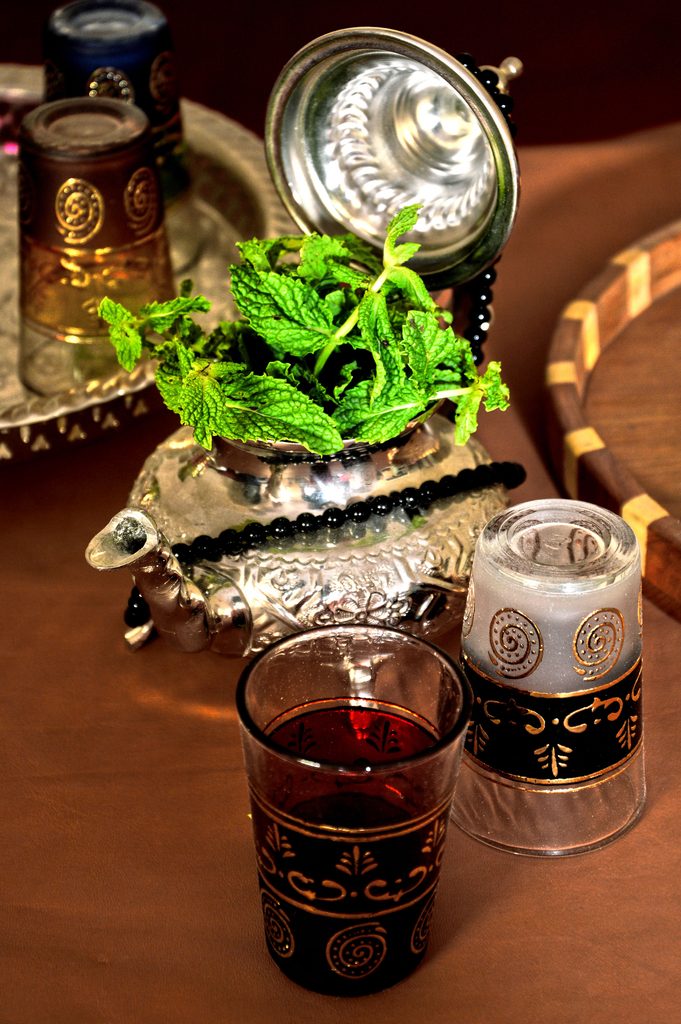
“The teapot’s lid is open, revealing fresh green mint leaves inside…”
Mint tea is not rushed. It is poured high, cooling as it falls, creating a thin layer of foam — a small ceremony of warmth and generosity. In the desert, tea is not a drink; it is a pause, a breath, a moment of stillness before the meal.
🍋 Preserved Lemon — Brightness in a Slow World
Preserved Lemon: A Bright Anchor of Moroccan Cooking
Preserved lemon is the desert’s way of holding sunlight.
Inside a glass jar, lemon wedges mixed with brown sugar glow like small pieces of gold.
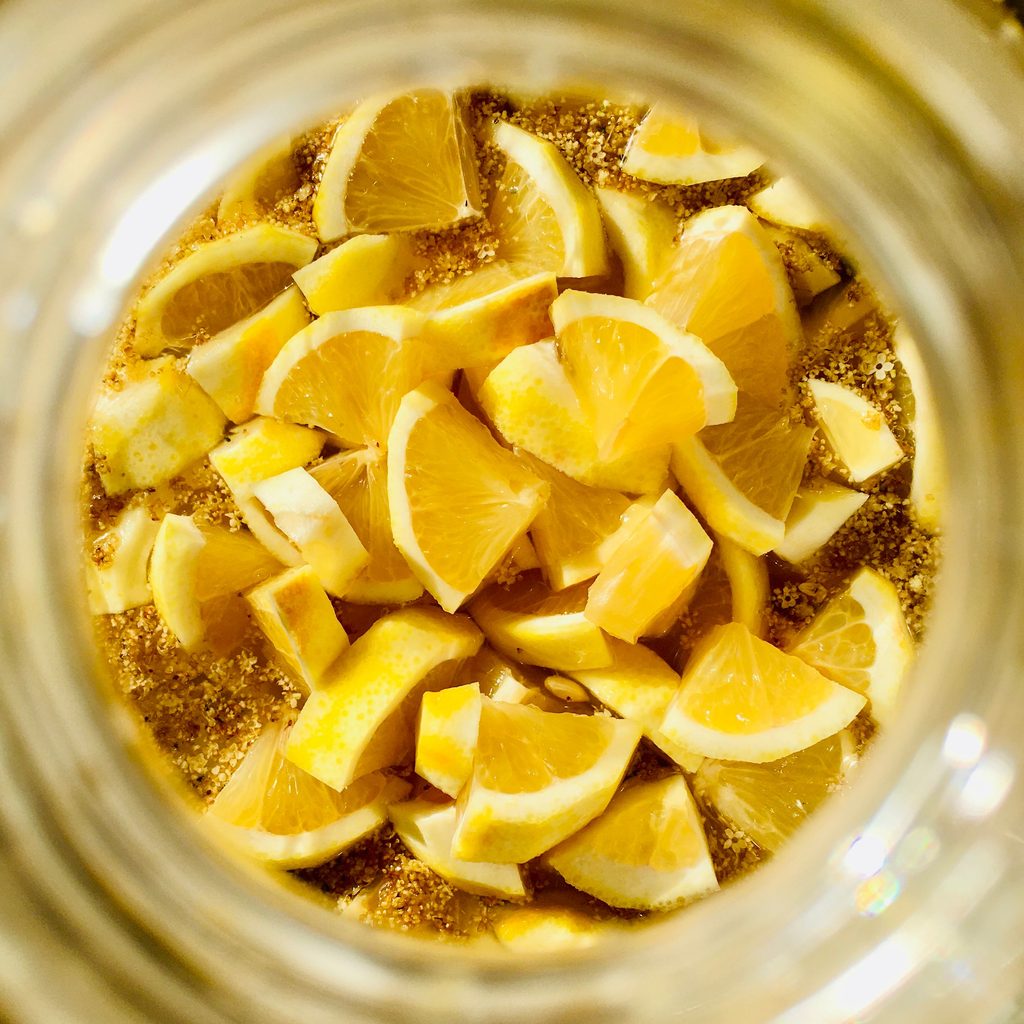
“Numerous small pieces of lemon wedges mixed with brown granulated sugar…”
The lemons soften over weeks, becoming salty, bright, and deeply aromatic. They slip into tagines, couscous, and stews — adding a gentle sharpness that cuts through warmth. In a landscape of sand and silence, preserved lemon is the spark.
🌶️ Ras el Hanout — The Desert’s Signature Blend
Ras el Hanout: The Signature Spice Blend of Morocco
Ras el Hanout is not a single spice — it is a story.
In the spice markets, conical piles rise like miniature dunes, each one a different shade of saffron, paprika, turmeric, cumin.
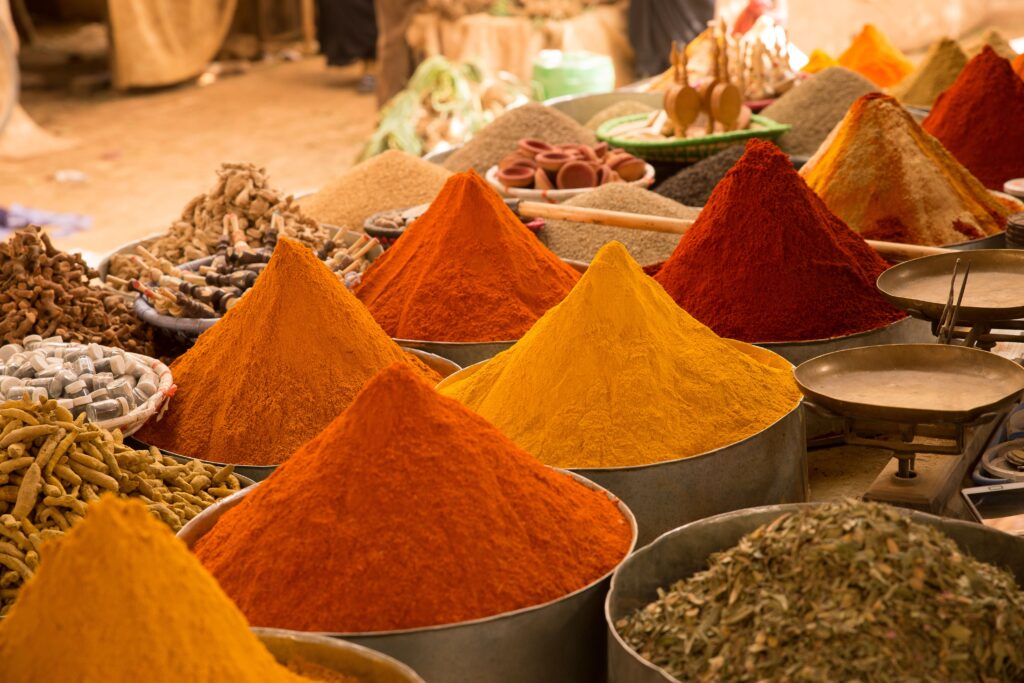
“A vibrant spice market stall filled with a wide variety of spices…”
Ras el Hanout (“top of the shop”) is a blend that changes from vendor to vendor — sometimes 12 spices, sometimes 20, sometimes more. It carries warmth, depth, and the layered complexity of desert cooking. It is the backbone of tagines, couscous, and slow stews.
For a deeper look at Morocco’s spice traditions, explore our Week 1 post on Marrakech’s spice culture and Ras el Hanout.
🥘 Tagine & Couscous — Slow Stews of the Desert Table
A Moroccan meal is built slowly.
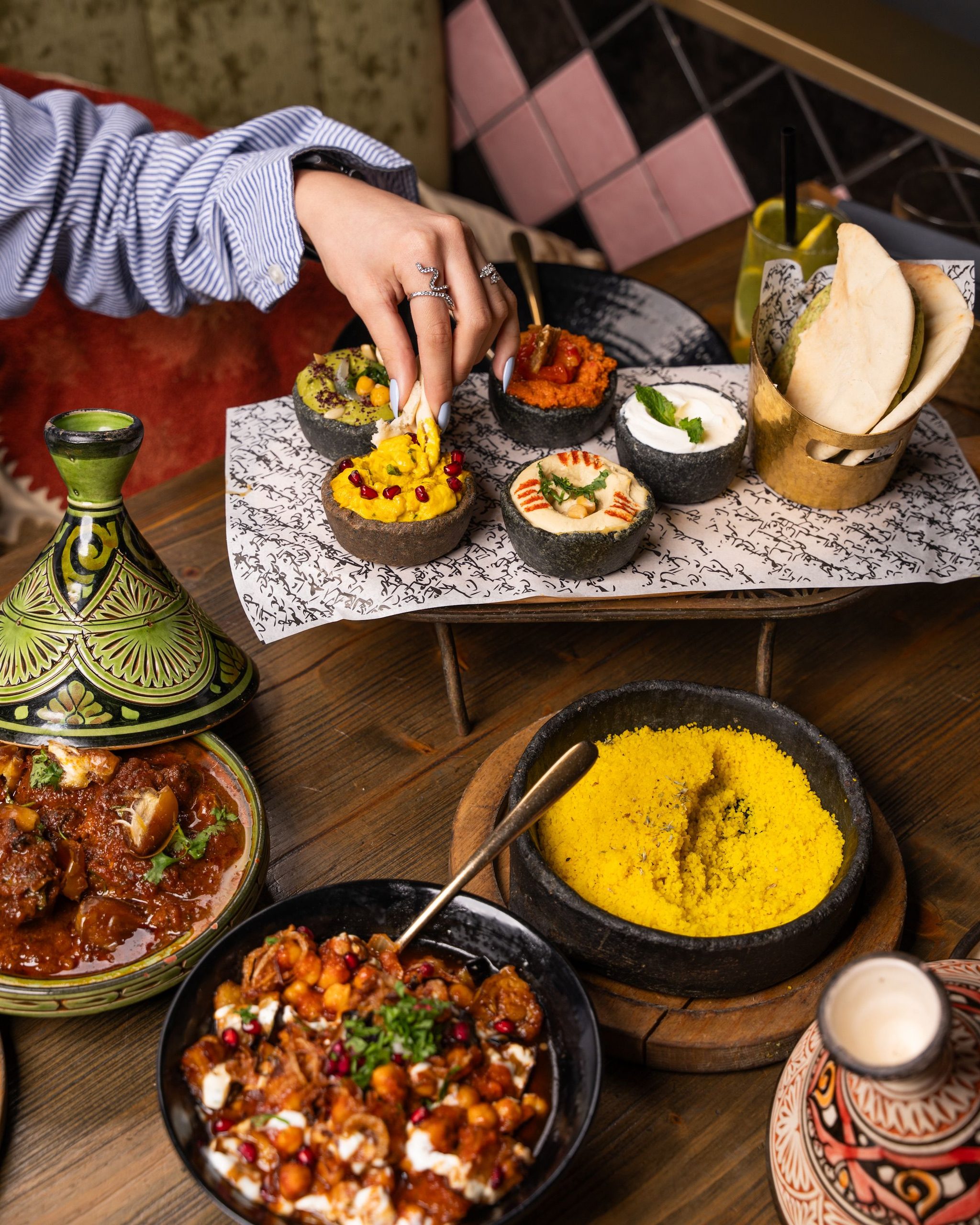
The green ceramic tagine containing a rich stew sits at the center of the table, its conical lid lifting to release steam and spice.
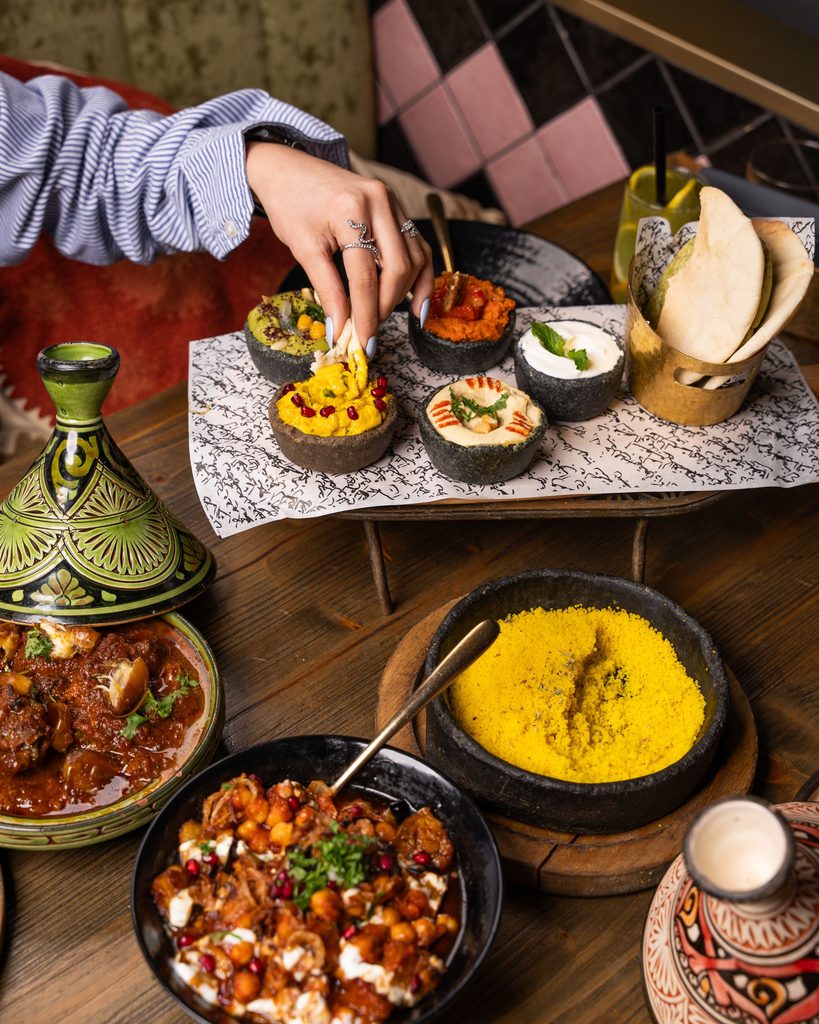
“A green ceramic tagine containing a rich stew…”
Couscous is fluffed by hand. Vegetables soften under low heat. Meat cooks until tender. The meal is shared — hands reaching, bread tearing, flavors mingling. In the desert, food is communal, warm, and grounding.
🕌 Spice Geometry — The Market as a Landscape
Moroccan spice markets mirror the desert itself.
Conical piles of saffron, turmeric, paprika, and cumin rise like small mountains — geometry, color, and aroma shaping the air.
“Large conical piles of colorful spices in metal containers…”
The market is a sensory map: brass bowls, terracotta tones, warm light, and the hum of everyday life. It is here that the desert’s flavors begin.
🌙 A Warm Table in a Quiet Landscape
Oasis foodways are not loud. They are gentle, slow, and deeply comforting.
Mint tea for welcome. Preserved lemon for brightness. Ras el Hanout for depth. Tagines for warmth. Spice markets for geometry. A shared meal for connection.
In the Sahara, food is a way of holding warmth against the vastness of the dunes — a way of creating home in a landscape of silence.