
What Is Eurythmy? The Art of Movement Explained
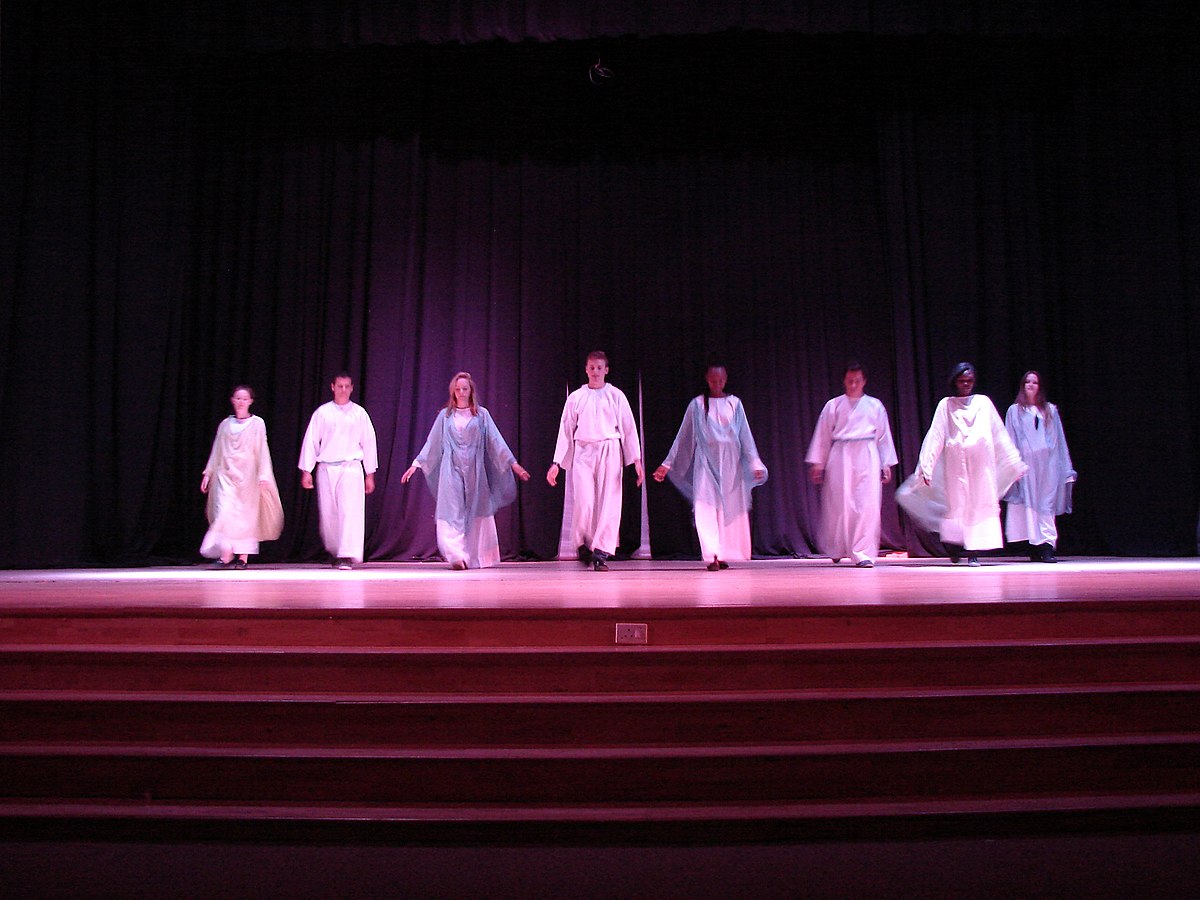
Eurythmy is not dance, nor mime, but an art of movement, wherein speech and music are made visible through the conscious movements of the limbs.
In 1912, Dr. Rudolph Steiner, an Austrian initiate, scientist, artist, and philosopher, brought a new art of movement into existence on the foundation of Anthroposophy.
Anthroposophy is a path of knowledge that changes one’s whole outlook to life. A new world of consciousness opens. “Anthropos’’ in Greek means the human being, striving through the inner wisdom or consciousness, “Sophia”, to receive the wisdom or universal consciousness.
Sound creates movement
Anthroposophy brings new light of consciousness into every field of life, from education, curative education, arts and science, to medicine, architecture, social science, bio-dynamic farming, and a new art of movement called Eurythmy.
The new art is not a dance, nor a meme, but an art of movement, making visible the “EU”- beauty and harmony of sound in speech and music, and creating a new health-giving rhythm in the organism. Eurythmy is speech and music made visible through conscious movements of the limbs. Eurythmy uses for its expression the most flexible of all instruments, the human body. Eurythmy knows no limitations in its possibilities for the development of the body, mind, and soul. Sounds contain wisdom, laws, and mysteries of the universe.
Sounds made visible through conscious movements of the limbs in Eurythmy, make these very laws more real and unlock step by step, the dynamic force behind the tangible world. These are the very forces, which are working in us, sustaining our organism.
The very fabric of our being is created by the formative forces of the cosmos. The whole universe is created out of sound with its seed in Om or Aum. The Upanishad says: “Brahma begins creation”. It means the whole creation comes out of sound. Om is the universe.
Invoking these sounds, activating them through this movement art, we strengthen a general feeling of wellbeing. Not only that, but Steiner’s movement practice is differentiated, since sound is also differentiated in structure, and the process of its unfolding is highly curative for any illness, be it of the psychosomatic kind, chronic or acute.
Aspects of Eurythmy
Dr. Steiner has developed this movement practice along a three-fold aspect. Firstly, as a performing art, secondly as group Eurythmy for children and adults, thirdly, therapeutically as curative Eurythmy in Rudolf Steiner clinics, hospitals, institutions and homes.
Dr. Steiner has given innumerable indications for Curative Eurythmy for innumerable physical and mental problems. These curative exercises must be done under the doctor’s guidance, otherwise, the same could be harmful if given without proper guidance or responsibility. Through movement‑based expression one experiences health in its totality.
Through this art form one becomes more sensitive, more ecologically conscious and more aware of forming a deep connection to whatever one is doing in everyday life.
Eurythmy does not try to manipulate one’s destiny to seek a quick and easy way out of one’s problems. Instead, Eurythmy tries to strengthen one’s inner self to combat and overcome difficulties and not to push away any difficulty
2026 Update: Eurythmy continues to grow globally, especially in holistic education and expressive arts communities.
Eurythmy invites a quiet attentiveness to rhythm and meaning. For another form of distilled expression, explore our piece on Haiku, where imagery and emotion unfold in just a few syllables.
Where to watch this?
Light Eurythmy Ensemble from Dornach, Switzerland, performing on Saturday, November 24, at 10.30am at Inodal Waldorf School, Andheri West, Mumbai.
Dilnawaz Bana, had her training in Dornoch, a town near Basel in Switzerland, which houses the University of Spiritual Sciences, known as the “Goetheanum”. Complete study to become a Curative Eurythmyist can extend up to six years of sound study, which includes subjects like speech formation, painting, sculpturing, geometry and basic study of the anatomy and physiology



4.5