
Maldives Snorkeling in August: 3 Magical Encounters with Manta Rays, Whale Sharks & Glowing Shores
Snorkeling the Maldives in August
The Maldives in August transforms into one of the world’s most spectacular snorkeling destinations.
When you envision the Maldives, the mind instantly goes to overwater bungalows and infinite stretches of turquoise water. But what lies beneath the surface of those idyllic lagoons is even more spectacular, especially as late summer rolls in.
While August brings the southwest monsoon season to the Indian Ocean, it also brings a massive influx of plankton to specific atolls. For snorkelers, this means one very exciting thing: it is feeding time for the ocean’s most magnificent giants.
If you’re exploring calm travel this season, you can also read our guide to 3 calm destinations across Asia, the Middle East, and Oceania.
Preparing for Snorkeling in the Maldives in August
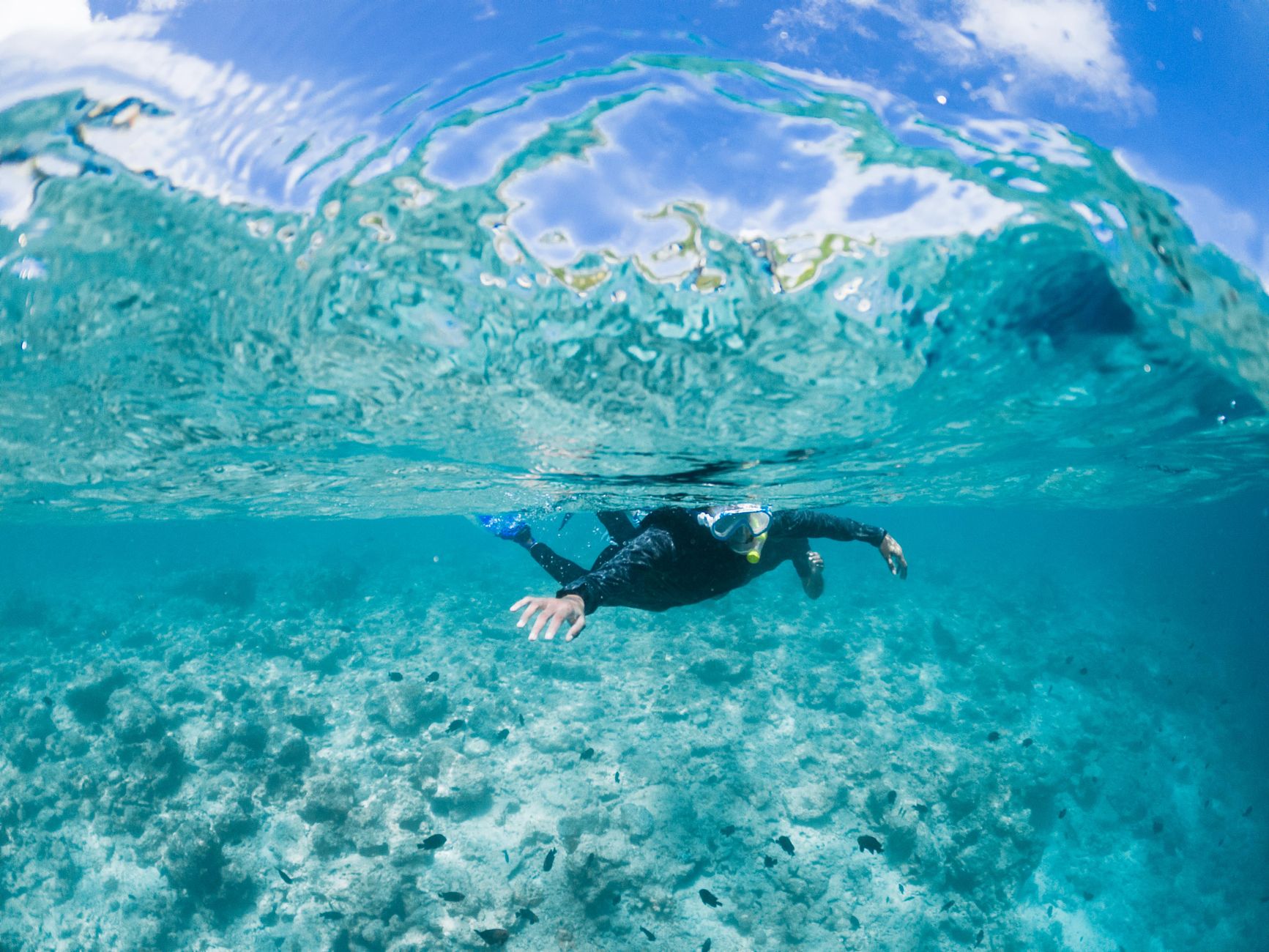
August in the Maldives is a unique month for snorkelers because the southwest monsoon brings nutrient‑rich water into the atolls. This creates both extraordinary wildlife encounters and slightly shifting ocean conditions. Visibility can vary from crystal‑clear mornings to plankton‑filled afternoons, but this is exactly what draws manta rays and whale sharks closer to the surface. Snorkelers should expect gentle swells, occasional cloud cover, and warm water temperatures hovering around 28–29°C.
If you prefer calm‑travel pacing, aim for early morning sessions when the lagoons are quieter and the water feels almost weightless. For Hanifaru Bay, mid‑day often brings the strongest plankton concentration, which means more mantas. In South Ari Atoll, whale sharks tend to cruise along the reef edges during late morning hours. Carry a lightweight rash guard, stay relaxed on the surface, and let the currents guide you rather than fighting them. The Maldives rewards slow, mindful movement — the calmer you are, the closer the ocean comes to you.
Maldives snorkeling with manta rays in Hanifaru Bay
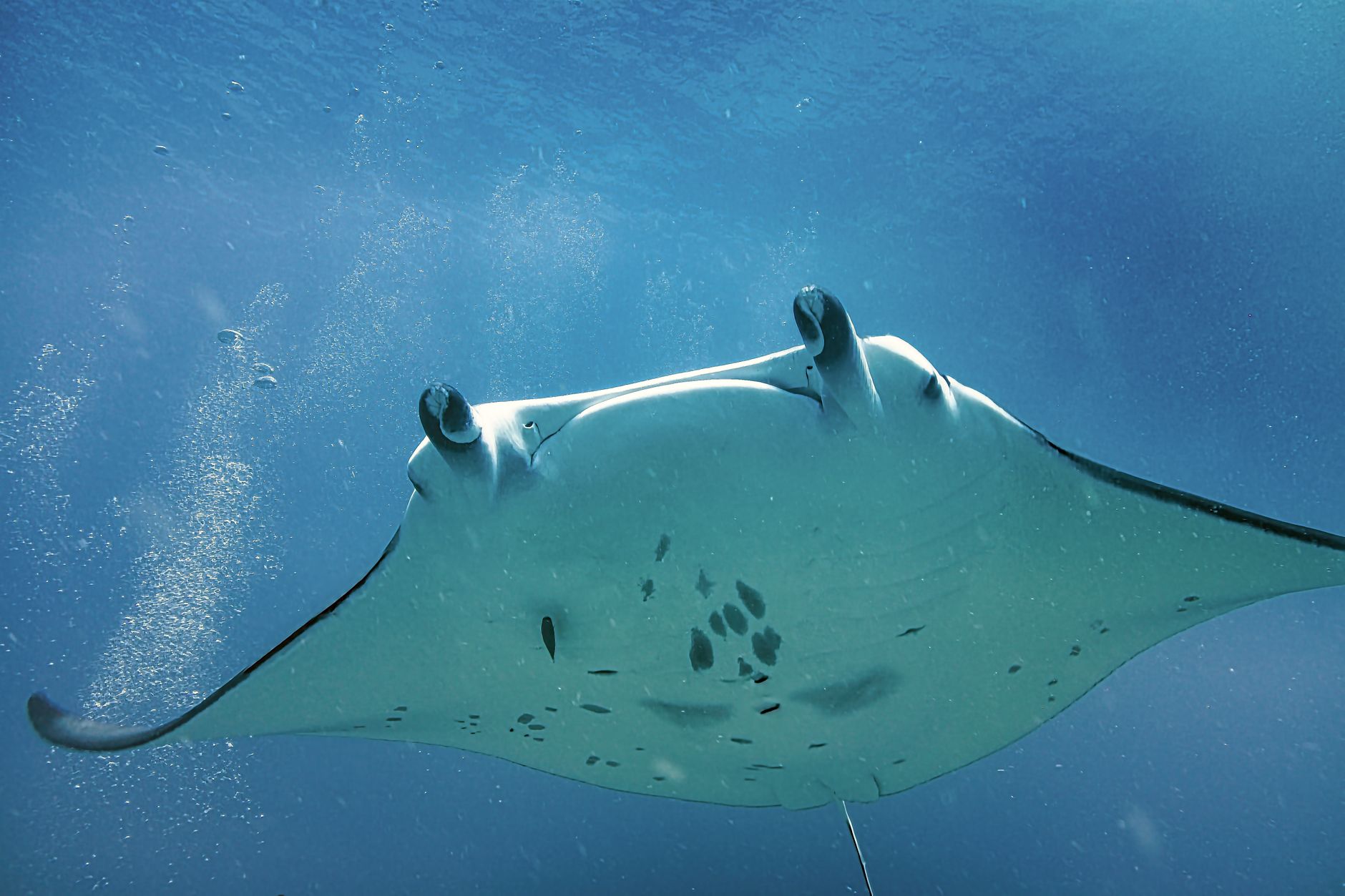
The summer currents funnel massive amounts of plankton into this small, scoop-shaped bay, creating a natural feeding frenzy. It is not uncommon to see dozens—sometimes over a hundred—reef manta rays barrel-rolling through the water simultaneously. Because scuba diving is banned in the bay to protect the animals, snorkeling is the only way to witness this graceful, underwater ballet. Floating on the surface while these massive, intelligent creatures sweep past you is a truly profound experience.
The Ultimate Encounter: Whale Sharks of South Ari Atoll
While Hanifaru Bay belongs to the mantas, the South Ari Atoll is famous for its year-round residents: whale sharks. August is a fantastic time to encounter these gentle, bus-sized sharks cruising through the shallow reef drop-offs. Despite their intimidating name and sheer scale, whale sharks are incredibly docile filter-feeders. Swimming alongside one as its spotted, starry back glides effortlessly through the warm, clear water is the kind of encounter that fundamentally changes how you view the ocean.
Maldives Bioluminescence: The Sea of Stars: Vaadhoo Island
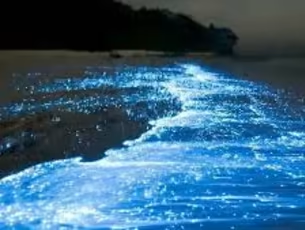
The magic of the Maldives doesn’t stop when the sun goes down. In fact, on certain beaches, the shoreline wakes up.
Thanks to the same nutrient-rich waters that draw in the mantas, beaches on islands like Vaadhoo often experience spectacular blooms of bioluminescent phytoplankton in the late summer. When agitated by the breaking waves or your footsteps in the wet sand, these microscopic organisms emit a brilliant, glowing blue light. Walking along the shoreline at night feels like you are stepping through a liquid galaxy, perfectly mirroring the starry sky above.
Best Time to Experience the Sea of Stars
Bioluminescence on Vaadhoo Island is most visible on moonless nights when the shoreline is dark enough for the glow to stand out. The phenomenon usually peaks between 8 PM and midnight, especially when the waves are gentle and the tide is rising. The phytoplankton respond to movement, so even the smallest ripple — a step in the wet sand or a soft wave brushing the shore — can trigger a burst of electric‑blue light.
For a calm‑travel experience, walk slowly along the beach and let your eyes adjust to the darkness. The glow appears stronger when you avoid artificial lighting, so choose a quiet stretch of shoreline away from resorts. On nights when the sky is clear, the bioluminescent waves mirror the stars above, creating the surreal “liquid galaxy” effect that Vaadhoo is famous for.



Looks exciting.
It was such a serene experience to write about. Glad it resonated.