Caribbean Tropical Light: From Desert Gold to Turquoise
A Micro‑Essay on Tropical Light: From Desert Gold to Caribbean Turquoise
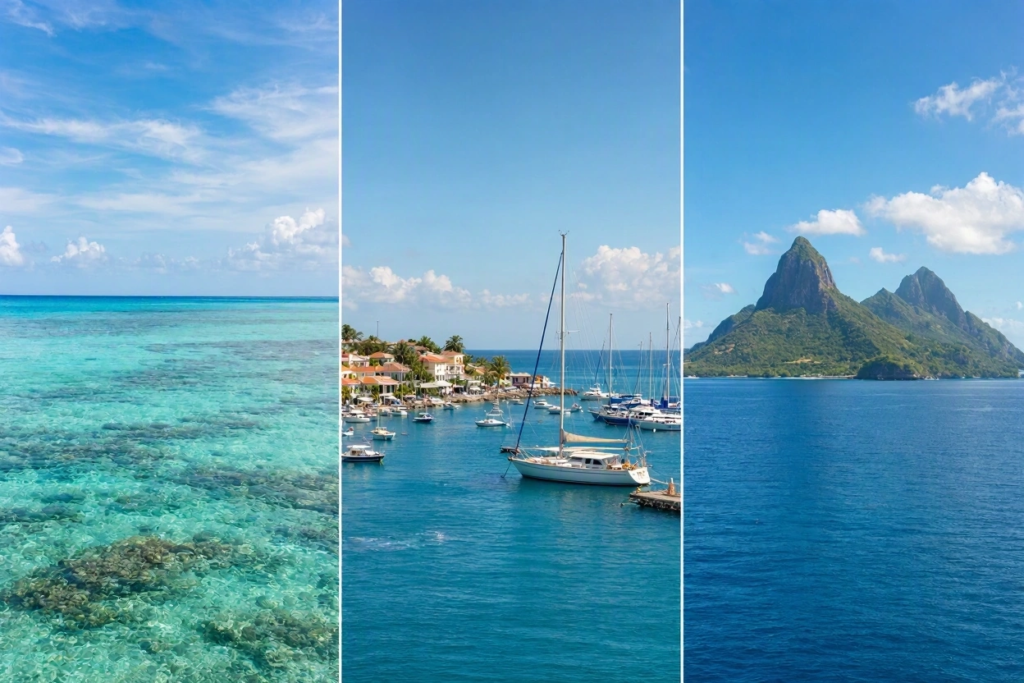
This essay continues the journey begun in Caribbean Arrival: Belize, Antigua & St. Lucia – Three Shades of Blue, where reefs, harbors, and volcanic peaks introduced the diverse landscapes of the Caribbean. Here, the focus shifts from geography to perception, exploring how light shapes the way we experience a place.
Every landscape is remembered by its light.
We often think of geography in terms of mountains, rivers, deserts, or seas, yet what lingers in memory is often something less tangible. A place becomes recognizable not only through its physical form but through the way sunlight falls upon it.
Caribbean Tropical Light and the Memory of Place
Desert Gold
In the desert, light arrives in gold.
It sharpens horizons and reveals distance with extraordinary clarity. Under an open sky, dunes, rock formations, and ancient cities seem sculpted by the sun itself. Color is restrained and disciplined. Gold, amber, ochre, and sandstone dominate the landscape, creating a world where shadow becomes as important as illumination.
Desert light encourages contemplation. It stretches time. Morning and evening become theatrical events, while midday transforms the landscape into a study of contrasts.
The Caribbean tells a different story.
Here, light does not simply descend from above.
It returns from below.
Caribbean Tropical Light and the Sea
When Water Becomes a Second Sky
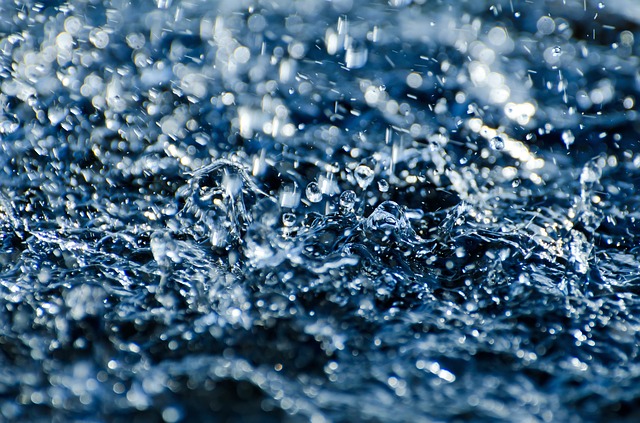
Sunlight reflects from turquoise lagoons, shallow reefs, white sand, and open sea, creating an environment that appears illuminated from every direction at once. Water becomes a second sky, amplifying brightness and multiplying color.
The effect is immediately visible.
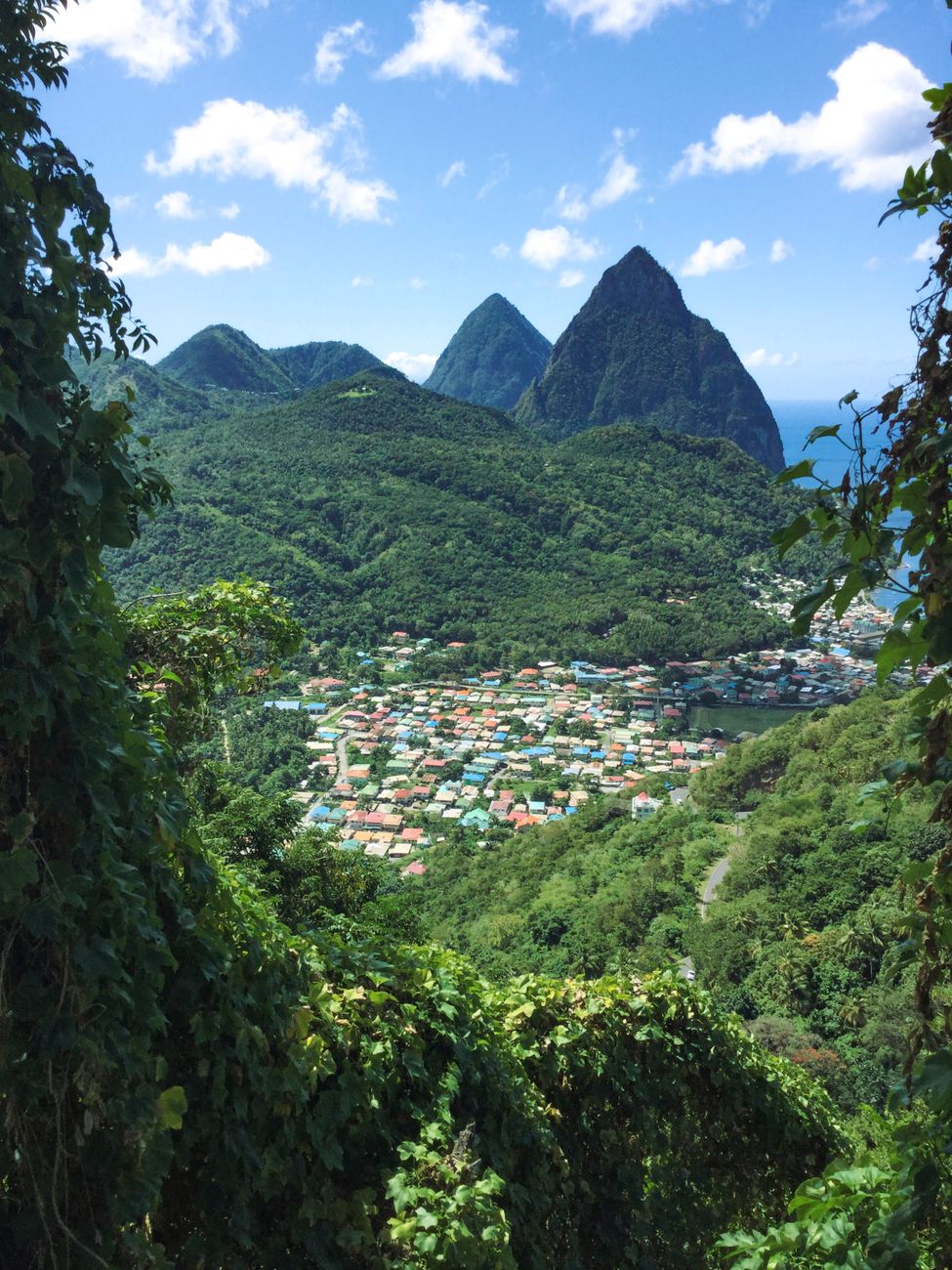
Green rainforest appears more vivid. White buildings seem brighter. Coastal villages acquire a luminous quality that feels almost painterly. Even shadows soften beneath the influence of reflected light.
The same sunlight that transforms turquoise waters and tropical landscapes also nourishes the ingredients explored in Caribbean Food Staples: Plantains, Coconut, Saltfish & Fruit, linking the region’s visual beauty to its culinary traditions.
This abundance of light has shaped the Caribbean imagination for centuries.
Artists, photographers, and writers have repeatedly returned to the region not merely because of its landscapes, but because of the atmosphere created by the interaction of water and sun. The sea becomes more than a geographical feature. It becomes a source of illumination, transforming ordinary scenes into memorable ones.
Caribbean Tropical Light and Changing Perception
From Gold to Turquoise
Desert landscapes often inspire reflection through vastness and silence. Caribbean landscapes invite attention through movement and color. Waves shimmer. Trade winds shift the clouds. Sunlight dances across the surface of the sea, transforming familiar horizons from one moment to the next.
Neither quality is superior. Each reveals a different relationship between people and place.
One world is shaped by stone and sun.
The other by sea and sun.
Together they remind us that geography is not experienced only through landforms or climate, but through the light that reveals them.
Perhaps this is why travelers remember color long after specific details have faded. We may forget the names of roads, villages, or beaches, yet we remember the glow of a desert evening or the brilliance of turquoise water beneath a tropical sky.
The transition from desert gold to Caribbean turquoise is not simply a change in scenery. It is a change in perception.
Light teaches the eye to see differently.
What begins as geography becomes atmosphere. What begins as a landscape becomes a memory.
And somewhere between the golden horizons of the desert and the luminous blues of the Caribbean, we discover that every journey is also a journey through light itself.
And through that change, the journey continues, from the landscapes explored in Caribbean Arrival: Belize, Antigua & St. Lucia – Three Shades of Blue to the culinary traditions featured in Caribbean Food Staples: Plantains, Coconut, Saltfish & Fruit.
The Caribbean reminds us that light is more than illumination. It is atmosphere, memory, and emotion. Long after a journey ends, it is often the color of that light that remains.