
A natural extension of the Japan arc
Spring arrives differently in Kyoto.
Where Tokyo greets the season with motion — trains, crossings, blossoms drifting across neon — Kyoto receives it with stillness. The city feels older in spring, as if the season reveals its original rhythm: slow mornings, quiet rituals, and a kind of beauty that doesn’t rush to be seen.
Kyoto doesn’t bloom loudly.
It unfolds.
This piece continues Japan arc by shifting the lens from Tokyo’s energy to Kyoto’s contemplative spring — a transition that mirrors the emotional shift from winter’s discipline to spring’s renewal.
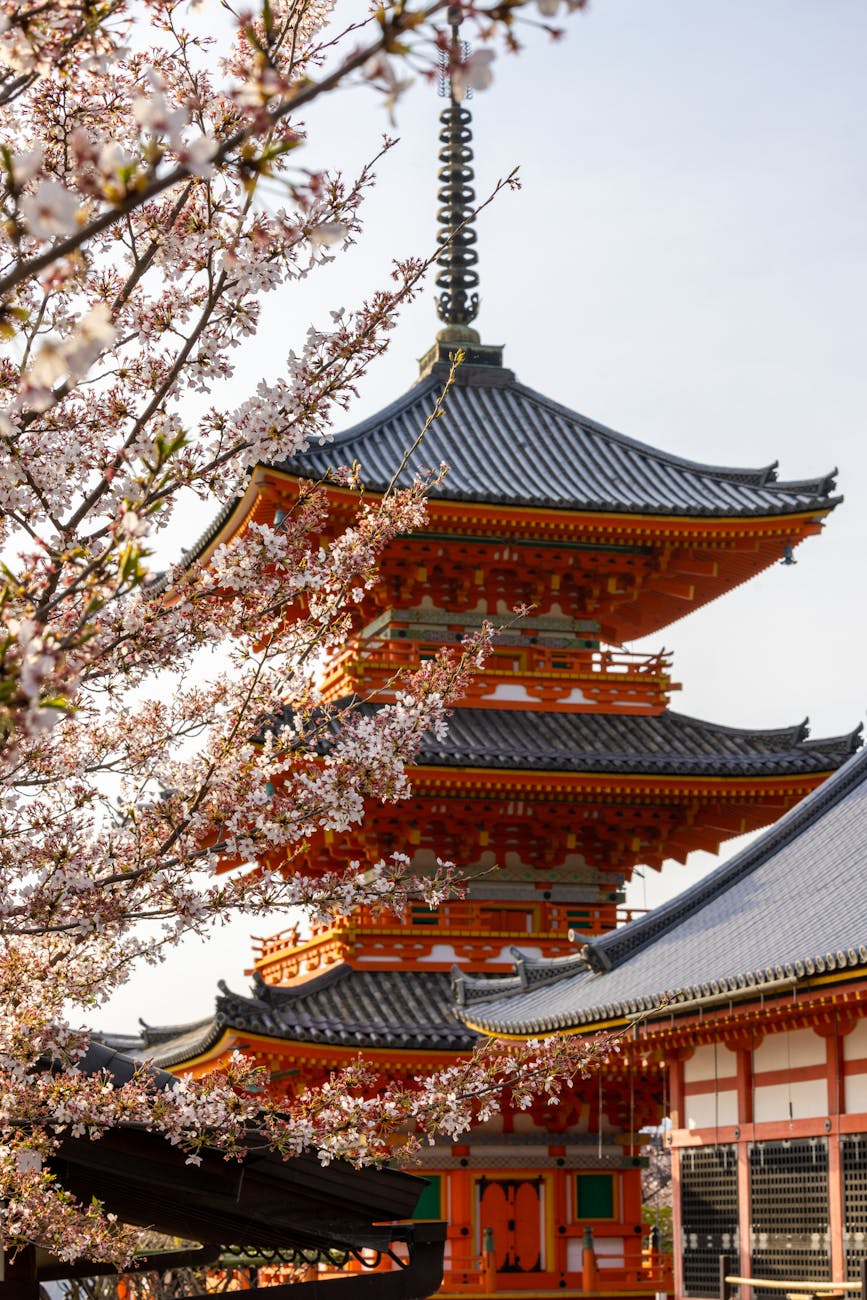
1. Temples: Where Spring Feels Like a Pause
Kyoto’s temples hold spring the way a bowl holds water — gently, without disturbance. The city’s spiritual architecture becomes a frame for the season.
At Kiyomizu‑dera, the first light of the season falls across wooden verandas that have watched centuries turn. The air is cool, the city still waking, and the only sound is the soft shuffle of visitors climbing the slope. Spring here isn’t a spectacle; it’s a pause.
Further south, Nanzen‑ji feels like a meditation in motion, At Nanzen‑ji, the gardens shift from winter’s monochrome to the first hints of green. Moss brightens. Water moves differently. Even the stone pathways seem to breathe. Kyoto’s temples remind you that renewal doesn’t always announce itself — sometimes it arrives as a whisper.
For readers who enjoy a deeper cultural context, the Japan National Tourism Organization offers beautiful historical notes on Kyoto’s temple districts (https://www.japan.travel/en/).
2. Tea: A Ritual That Marks the Season
If hanami picnics define Tokyo’s spring, Kyoto’s is defined by tea.
The tea houses of Uji and Gion treat spring as a sensory reset. The matcha is brighter, the aroma deeper, the bowls warmer in your hands. Tea here is not a drink; it’s a seasonal marker — a way of noticing the shift in air, light, and mood.
The ritual slows you down.
You sit.
You breathe.
You taste the season.
Kyoto teaches that spring is not something to chase; it’s something to receive.
For readers curious about the origins of matcha culture, the Uji Tea Council maintains excellent resources (https://www.ujicha.or.jp/english/).
3. Timelessness: The Emotion Kyoto Holds
There’s a reason Kyoto feels timeless in spring.
It’s not just the temples or the tea houses — it’s the way the city holds memory.
Wooden machiya houses cast long shadows on narrow lanes. Plum blossoms appear before the sakura, soft and understated. The river moves with a kind of patience. Everything feels intentional, as if the city has agreed to bloom only when it’s ready.
Kyoto’s spring is not about arrival.
It’s about continuity — the sense that seasons return not to surprise us, but to remind us of what endures.
This emotional logic connects beautifully to your earlier article, Tokyo in Bloom, creating a natural internal link between the two arcs.
If you’d like to explore Kyoto’s temples and tea districts with a local who understands their quiet rhythms, I’ve added a trusted private‑guide option below.
Why This Piece Extends the Japan Arc Naturally
Japan arc began with winter stillness, moved into Tokyo’s early spring bloom, then into the city’s motion and energy. Kyoto becomes the natural next step — a widening of the lens, a softening of pace, a return to tradition.
This is where the journey shifts from seeing spring to feeling spring.
You may like to explore- 7 Japanese Ways to Notice Winter Stillness: A Traveller’s Quiet Guide