
🌿 The Poetry of Transit: Stories Found Between Stations
There is a certain kind of clarity that only arrives when you’re in motion, and that is the quiet truth at the heart of the Poetry of Transit. The Poetry of Transit is not about rushing or arriving — it’s about being carried, gently, through the in‑between.
Tokyo understands this better than most cities. This essay is part of a broader reflection on the Poetry of Transit and the quiet clarity that movement creates.
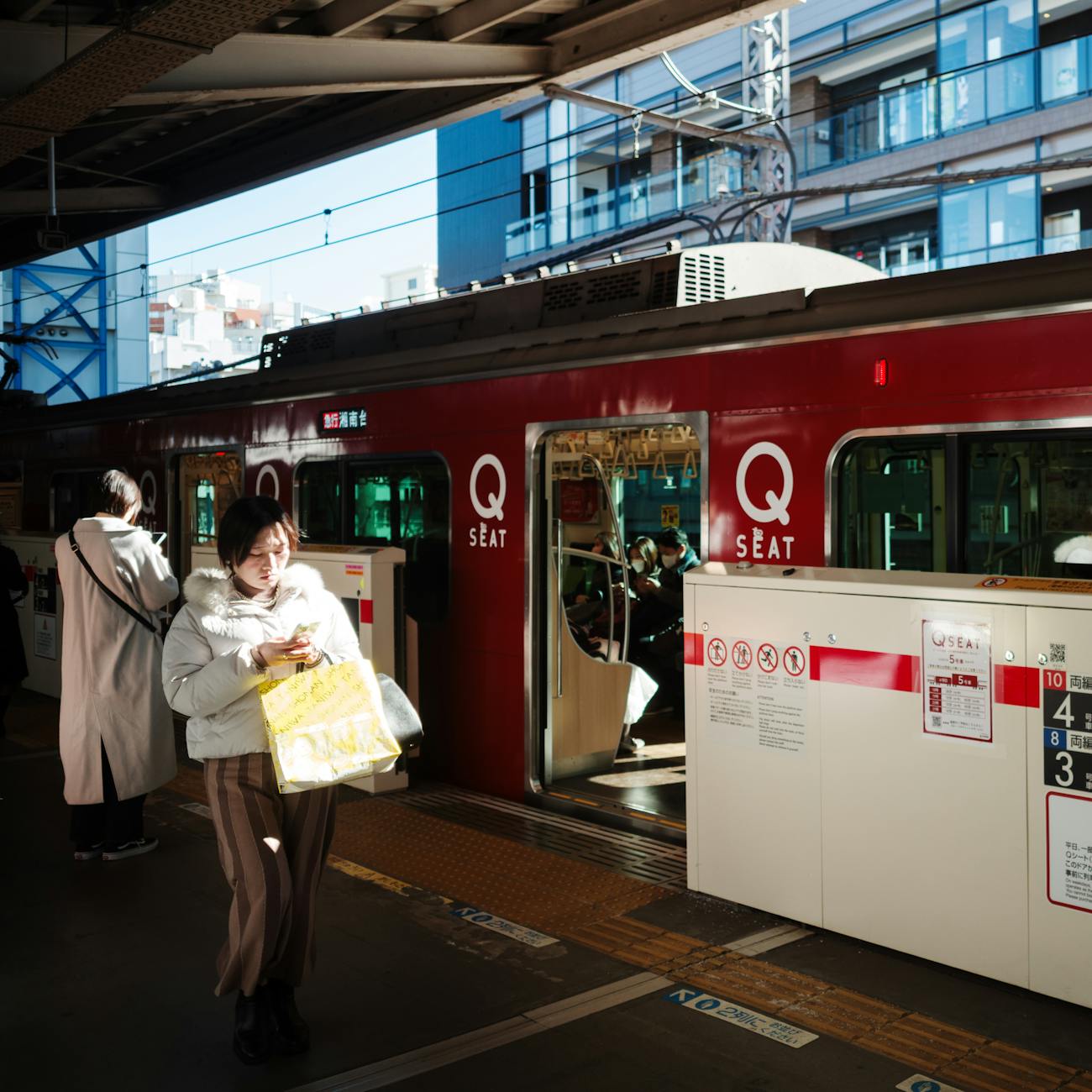
The Soft Rhythm of Being Carried
Inside a train, the city becomes a moving film. Neon signs blur into soft streaks of colour. Vending machines glow like tiny lighthouses on empty platforms. A lone commuter adjusts their scarf. A schoolbag swings gently with the sway of the carriage. These are the small, unspoken stories that live between stations — the ones you only notice when you’re not trying to notice anything at all.
Transit is where thoughts drift without permission.
Where decisions you’ve postponed quietly rearrange themselves.
Where emotions you’ve been carrying finally settle into place.
Movement becomes a kind of meditation.
The Pause Disguised as Motion
There is comfort in being both inside and outside the moment. You’re present, yet slightly removed — a witness to a world that keeps unfolding without needing you to participate. The train holds you in a temporary pause disguised as motion. It’s a rare kind of stillness, the kind that doesn’t require silence, only surrender.
Somewhere between two stations, something shifts.
A thought clarifies.
A feeling softens.
A question finds its answer.
This is the subtle magic of transit — the way it creates room for the mind to breathe. You’re not rushing toward a destination; you’re drifting toward understanding. The journey becomes a quiet conversation with yourself, one that only happens when the world is moving and you are still.
Tokyo’s Lines and the Stories They Carry
Tokyo’s transit lines are especially good at this.
The soft chime before the doors close.
The gentle announcement of the next stop.
The hum of the tracks beneath your feet.
The brief moment when the train emerges from a tunnel and the city opens up again.
These fragments become part of your internal landscape. They stay with you long after you’ve stepped off the train.
By the time the doors slide open, you’re not the same person who stepped in. Something inside you has shifted — not dramatically, but meaningfully. A thought has settled. A feeling has found its shape. A decision has quietly aligned itself.
Why We Return to Transit
Maybe that’s why we return to trains.
Not just to reach a destination, but to find the version of ourselves that only appears in motion.
The version that listens.
The version that notices.
The version that understands.
In the end, the Poetry of Transit isn’t about the journey or the arrival. It’s about the quiet space in between — the place where clarity finally catches up with us. It’s where the city becomes a companion, where movement becomes reflection, and where we rediscover the gentle truth that life is not lived only in destinations, but in the moments that carry us toward them.
This reflection continues the movement theme from Tokyo by Train, where the city’s lines shape both routes and rhythms.:
- Tokyo by Train: A City Connected by Lines
- Tokyo Street Food Diaries — Part 3
- Tokyo street food
- External reference
A soft, credible outbound link
Japan Guide — Transportation Overview
https://www.japan-guide.com/e/e2017.html
FAQ
What is the Poetry of Transit?
It refers to the quiet clarity and reflective space created when you’re in motion, especially on trains.
Why do people find clarity while travelling?
Movement softens the mind, allowing thoughts to settle and emotions to reorganise without pressure.
Why is Tokyo ideal for reflective transit moments?
Its calm train culture, rhythmic announcements, and seamless lines create a natural environment for introspection.
In the end, the Poetry of Transit isn’t about the journey or the arrival. It is the quiet space between stations — the place where clarity finally catches up with us, where movement becomes reflection, and where the Poetry of Transit reveals who we are when the world is moving and we are still. This is where the Poetry of Transit reveals its purpose — not in motion alone, but in the gentle awareness that rises from it. And perhaps that is why the Poetry of Transit stays with us long after the journey ends.