7 Ways the Pomegranate Shapes Azerbaijan’s Culture and Cuisine
Azerbaijan’s Pomegranate: More Than a Fruit, a Symbol
In Azerbaijan, the pomegranate is not just something you eat — it is something you inherit. The fruit appears in stories, carpets, festivals, and family tables with a kind of quiet authority. It represents abundance, continuity, and the idea that sweetness often comes wrapped in complexity. In a region shaped by mountains, trade routes, and shifting borders, the pomegranate has become a cultural anchor.
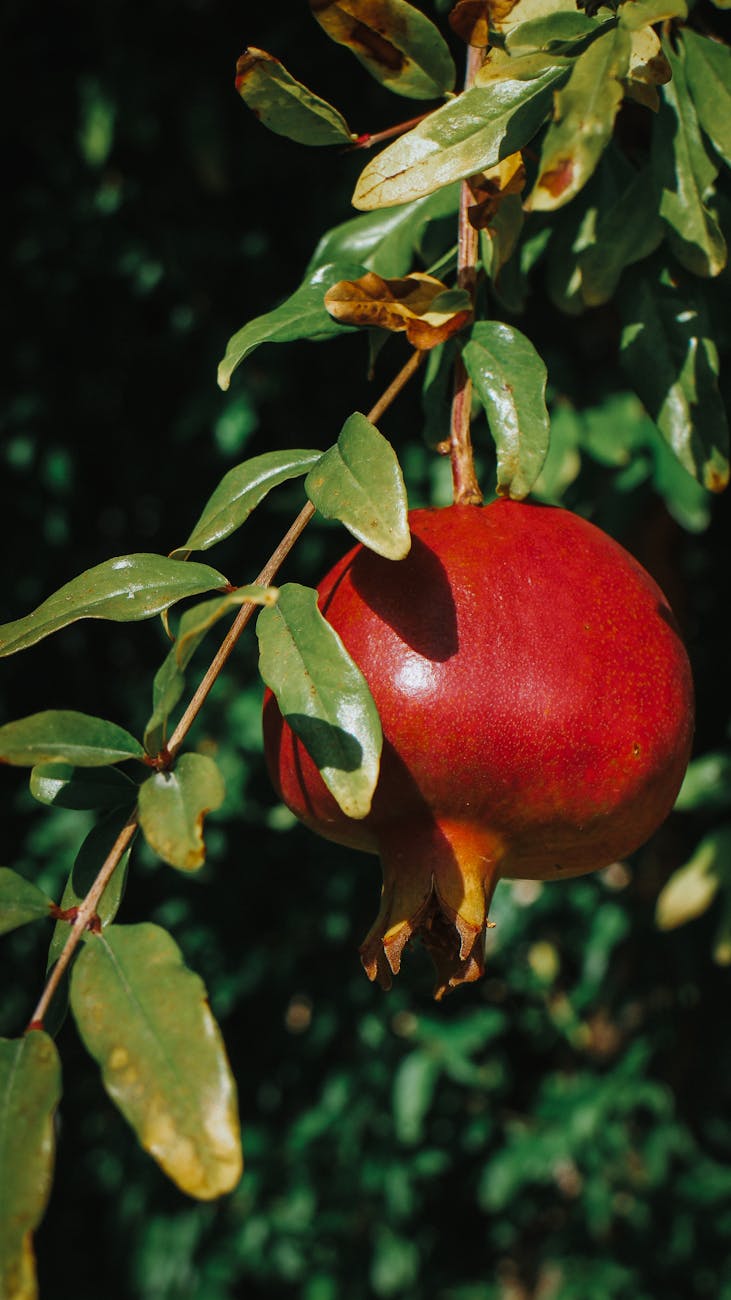
Walk through any market in autumn and you’ll see pyramids of ruby‑red fruit stacked like small lanterns. Vendors tap them gently to test their ripeness, listening for the soft, hollow sound that means the seeds inside are full and ready. The fruit’s geometry — a hard shell protecting hundreds of jewel‑like arils — mirrors the layered nature of the country itself.
A Fruit Rooted in Landscape and Memory
Azerbaijan’s climate gives the pomegranate exactly what it needs: long summers, dry heat, and soil that holds warmth even after sunset. The orchards in regions like Goychay stretch across gentle hills, their branches heavy with fruit by late October. This is where the country’s most celebrated harvest begins.
But the pomegranate is more than an agricultural product. It is woven into memory. Families gather to peel the fruit together, a slow ritual that turns into conversation. Children learn early how to open it without crushing the seeds. The fruit stains fingertips, cutting boards, and sometimes clothes — but no one minds. The stain is part of the experience, a mark of participation in something older than any single household.
The Geometry of a Cultural Icon
There is a reason the pomegranate appears in Azerbaijani carpets, ceramics, and miniature paintings. Its form is naturally symbolic: a sphere holding multitudes. Artists use it to represent unity, prosperity, and the idea that beauty often hides beneath a protective surface.
In Sheki, you might see pomegranate motifs carved into wooden panels or painted onto ceramics. In Baku, you’ll find them in modern design — stylized, abstract, sometimes reduced to a single curved line. The fruit adapts easily to different eras, which is why it remains relevant even as the country modernizes.
Goychay’s Pomegranate Festival: A Celebration of Abundance
Every November, the town of Goychay hosts a festival dedicated entirely to the fruit. Streets fill with stalls offering pomegranate juice, jams, syrups, and even savory dishes infused with the fruit’s tart sweetness. Musicians perform, dancers move in bright costumes, and the entire town becomes a celebration of color.
The festival is not just about food. It is about identity. It brings together farmers, artisans, and families from across the country. It reminds people that the pomegranate is a shared symbol — something that belongs to everyone, regardless of region or background.
A Fruit That Connects Past and Present
What makes pomegranate culture so compelling is its continuity. The fruit appears in ancient poetry and modern branding, in traditional recipes and contemporary cuisine. Chefs use it to brighten salads, glaze meats, or add depth to desserts. Home cooks use it to balance flavors in stews or simply eat it fresh, seed by seed.
The pomegranate bridges eras. It carries the memory of Silk Road trade, the rhythm of seasonal harvests, and the creativity of modern kitchens. It is a reminder that culture is not static — it evolves, absorbs, and adapts, just like the fruit itself.
A Taste That Stays With You
To taste a pomegranate in Azerbaijan is to taste the landscape: the heat of summer, the patience of harvest, the sweetness that comes only after effort. It is a fruit that asks you to slow down, to open it carefully, to appreciate the small bursts of flavor hidden inside.
And perhaps that is why it remains so beloved. It is not a quick fruit. It is a mindful one — a fruit that rewards attention, just like the culture that surrounds it.
If you missed Sheki post: Sheki: Caravanserai Architecture & Forest Light