7 Reasons Sheki’s Caravanserai and Forest Light Create a Timeless Silk Road Mood
Sheki’s Quiet Geometry: Stone, Shade, and Mountain Air
Sheki is one of those places where the landscape does half the storytelling. Tucked against the southern slopes of the Greater Caucasus, the town feels like it was built to rest — not to impress. The air is cooler here, softened by forest canopies and mountain winds that move slowly through the streets. Sheki’s architecture mirrors this calm. Stone walls, wooden eaves, and shaded courtyards create a rhythm that feels both ancient and deeply lived‑in.
Walk through the old quarters and you’ll notice how the town leans into its terrain. Houses sit on gentle inclines, their roofs catching filtered light from the forest above. The geometry is simple but intentional: arches, wooden latticework, and the quiet symmetry of caravanserai courtyards. Everything feels crafted for rest, trade, and the slow passing of seasons. Even the soundscape is gentle — footsteps on stone, distant birdsong, and the soft rustle of leaves moving in the mountain breeze.
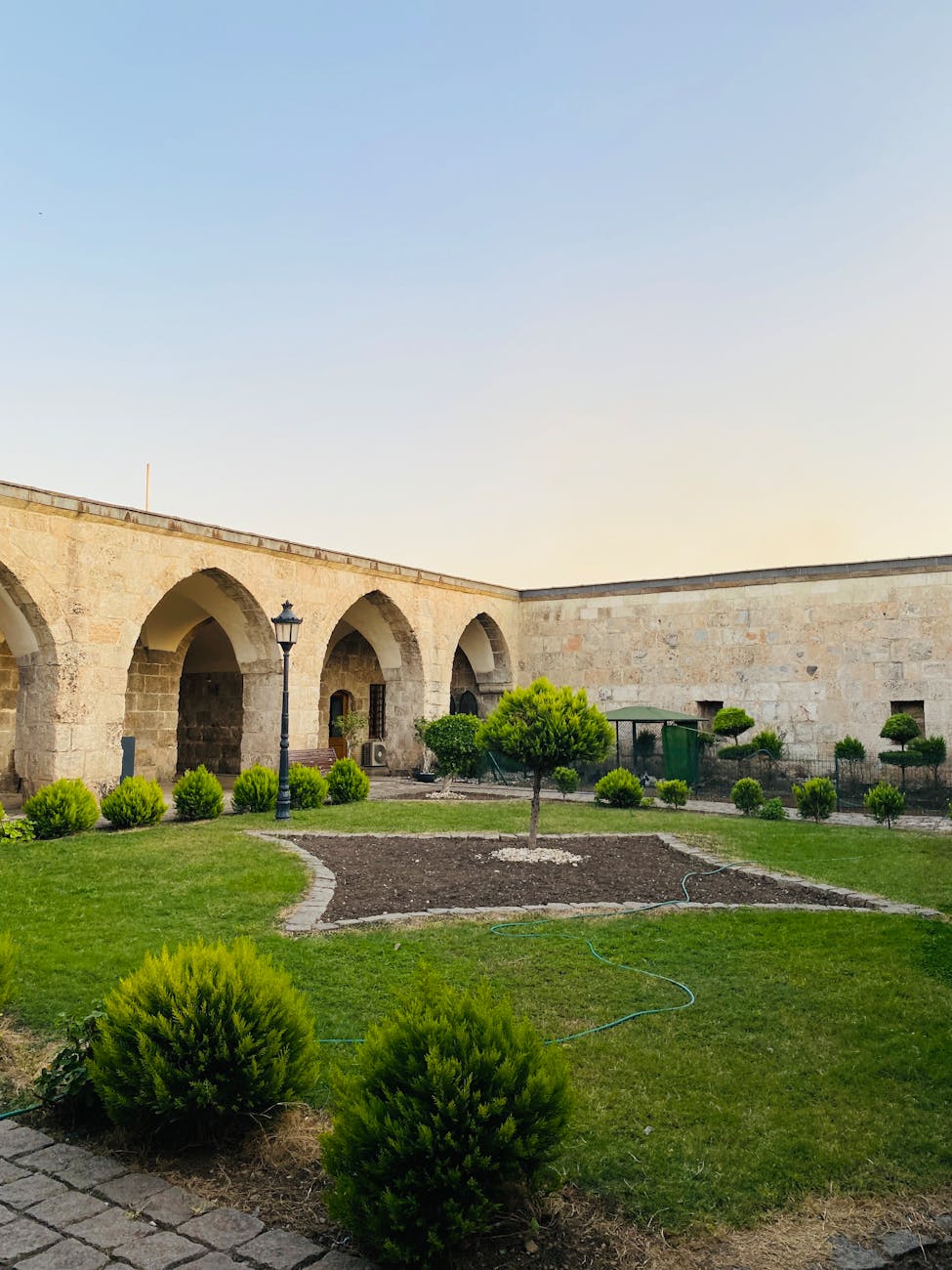
Image: Sheki caravanserai courtyard with stone arches
The Caravanserai: Heart of Sheki’s Architectural Memory
The Sheki Caravanserai is more than a historic building — it is the town’s architectural heartbeat. Built for Silk Road merchants, it was designed as a place of pause: thick stone walls for coolness, arched corridors for shade, and a central courtyard where travelers could breathe after long journeys.
Step inside and the world narrows into a geometry of arches and shadows. Light enters in soft angles, touching the stone just enough to reveal texture without overwhelming it. The courtyard feels like a held breath — quiet, balanced, and timeless. You can almost imagine the sound of hooves, the rustle of fabric, the low hum of trade.
What makes this space remarkable is its restraint. It isn’t ornate or imposing. Instead, it offers a kind of architectural honesty — a structure built for movement, rest, and the practical needs of merchants who crossed mountains and deserts. That simplicity is what gives the caravanserai its enduring presence. It is a place that still feels useful, even if its purpose has shifted from trade to memory.
Forest Light: The Mood That Defines Sheki
What sets Sheki apart from other Silk Road towns is its relationship with light. The forests above the town filter the sun into a soft, green‑tinted glow that settles over everything — stone, wood, water, and air. Even at midday, the light feels gentle, as if the mountains are holding it back.
Walk toward the Palace of Sheki Khans and you’ll see how the forest shapes the atmosphere. The trees frame the architecture, casting shifting patterns across the walls. The palace itself, with its intricate shebeke stained‑glass windows, seems to glow from within. The colors — amber, blue, ruby — catch the filtered light and scatter it across the courtyard in quiet fragments. It’s a kind of illumination that feels almost internal, as if the building is lit by memory rather than sun.
This interplay of forest and architecture gives Sheki its distinctive mood. It’s not dramatic like Baku’s skyline or vast like the Caspian horizon. It’s intimate — a town shaped by shade, texture, and the slow movement of light. The atmosphere encourages you to look closely, to notice details you might overlook elsewhere.
A Town That Moves at the Pace of Its Landscape
Sheki is not a place you rush through. It invites you to slow down, to match the rhythm of its mountains and forests. Sit in a teahouse, listen to the wind move through the trees, or walk the shaded lanes where stone meets sunlight in soft angles. The town feels like a pause — a moment of stillness in a region shaped by movement.
And perhaps that is Sheki’s greatest gift. It doesn’t demand attention. It offers presence — a quiet reminder that some places are meant to be absorbed slowly, one shaded courtyard at a time.
For readers exploring the Caucasus arc, your Baku post pairs beautifully with this one: Baku Old City → Modern Skyline